
If you spend any time online, whether as a founder, operator, or investor, AI can feel all-encompassing. It is everywhere and in everything. And rightfully so; there are dramatic implications for the things getting released (what feels like) every day! But for a lot of people, their inclination is that AI is the only thing worth paying attention to.

Source: Twitter / X
There’s some important nuance there. The vast majority of both capital and attention has been focused on foundation models, particularly those produced by companies like OpenAI, Anthropic, Google, Meta, Mistral, and others.
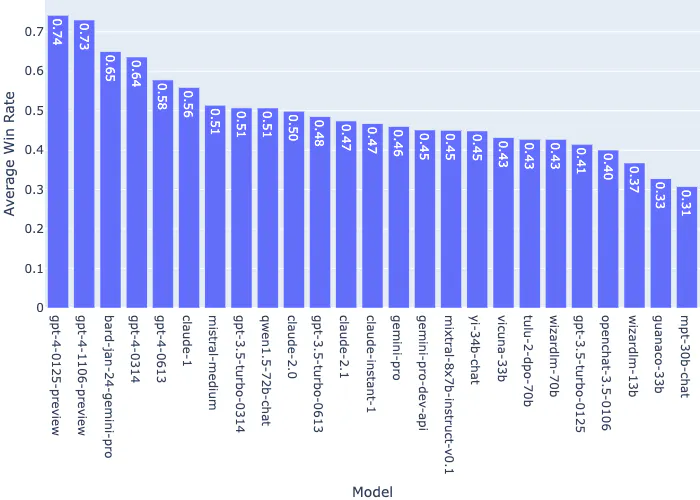
Source: Hugging Face
Beyond a core argument of performance, there’s the never ending debate between proprietary and open models (a topic we’ve dug into as well.) But all of this continues to revolve around core foundation models for generative AI use cases like code completion, text creation, text-to-image, and text-to-video. When people talk about AI being the “fourth major technology wave,” is this what they mean?
While foundation models take up the most attention, if you survey the landscape of both private and public tech companies, you’ll see that the reality is much more nuanced than that. Instead of these core models being the only thing that matters, what really matters are the things that these models can unlock.
For many companies, there are several implications of AI on their businesses, whether that be as core infrastructure or accelerating existing workflows. A few examples:
Copywriting: Startups like Jasper and Writer.com offered early exposure to people who weren’t familiar with generative text models. Jasper was an early customer of OpenAI’s GPT models. But the launch of ChatGPT took away a lot of the initial awe. For these companies, its unlikely their long-term success will come from a specific model. It will be, instead, leveraging these models as infrastructure to support building a specific value proposition. For example, focusing on a feature-rich collaborative system-of-record for managing copy, rather than differentiating on particular models.
Biotech: Drug discovery, research, and trial analysis are all, at their core, data problems. Identifying variables for change and outcomes is a big part of clinical research. The opportunity to leverage AI to accelerate existing biotech research could be significant if done correctly. ChatGPT is unlikely to be much help, but projects like DeepMind’s AlphaFold that have been trained on 100K known proteins may prove more useful.
Industrial Robotics & Defense: One of the biggest areas that have been left out of the generative AI hype cycle include use cases that interact with the physical world. While we’ve seen incredible digital renderings, there’s been more conversation of banning or burning driverless cars than any particular technological breakthroughs, for example. But companies the engage sensors and automation in the physical world can see meaningful advantages come through AI breakthroughs, even when the core infrastructure is not their own. Brian Schimpf, the CEO of Anduril, has explained the advantages that recent AI/ML breakthroughs can have on things like autonomous drones:
“We've been able to weave in all the different aspects of machine learning, and how you actually apply those techniques. It's a tool, not really an end in and of itself. We don't do AI research, we're not interested in any of that. We're looking at how can we best take what is working in the state of the art and apply it rapidly into these into these defense problem sets.”