








Thesis
In April 2026, the Department of War released its proposed budget for FY 2027: $1.5 trillion to “unleash the American Arsenal of Freedom, marking a 42% increase over current funding levels”. The reason for the increase was that “previous Administrations underinvested in our military while our enemies grew stronger and more dangerous”, causing the US to find itself “in the midst of one of the most complex threat environments in this nation's 250-year history.” With this, the US government has formally acknowledged a dangerous reality that has been long in the making: a confluence of adverse circumstances that seriously threatens the US military’s deterrent capacity for the first time since the end of the Cold War.
The first of these circumstances is the rise of peer competitors, notably China, which now has the industrial and economic muscle to outcompete the United States in any conventional arms race. The second is the decline of the US defense industrial base, a consequence of the overall decline of American manufacturing. The third is the US military’s post-Cold-War “day one” posture, which relies on overwhelming might to win an armed conflict quickly with overwhelming force backed by exquisite platforms and expensive munitions that cannot be replaced on a relevant time scale once depleted. Finally, the ascent of networked, autonomous, cheap military assets like drones to prominence in the modern battlefield is threatening to make expensive legacy systems like multi-million dollar THAAD interceptors obsolete from a cost perspective.
The historical forces that have led to the US military’s unpreparedness are complex, but perhaps the largest single factor has been American complacency since the end of the Cold War and the “unipolar moment” that saw the victory of liberal democracy in the Cold War and of the United States in particular as the sole remaining superpower. This complacency is perhaps best exemplified by the influential 1989 essay “The End of History?”, which posited that liberal democracy was the final stage of human evolution and that it would never again suffer a serious ideological rival.
This idea rested on the assumption that countries would converge around the same set of liberal democratic norms that governed the United States, such as free trade, popular sovereignty, constitutional government, and human rights. So even if another country were to rise to rival the economic or military power of the United States, there would be no serious ideological differences that could lead to conflict, especially because the globalization of the world economy would make any such conflict too costly to be worth it.
In other words, the “end of history” meant the end of great power conflict because even if someone grew powerful enough to challenge the United States in a conventional war, they would not have the ideological incentive to fight. The rise of a hyper-nationalist, nominally communist and increasingly autocratic China, along with the renewed revanchism of the Russian Federation in the 2010s and the 2020s, and their bellicosity with respect to Taiwan and Ukraine respectively, have shown this theory to be wrong. The world is now neither unipolar nor ideologically uniform. The 2022 Russian invasion of Ukraine was the final nail in the coffin for that way of thinking.
Nevertheless, the hubris of the 1990s and the 2000s led the US to outsource much of its manufacturing capacity abroad to China, which would soon replace the Soviet Union as a formidable adversary in Cold War II. Fast forward 30 years, and China now has 200x the shipbuilding capacity of the United States while dominating production in a host of critical weapons components, such that the US military is ironically heavily reliant on its chief geopolitical opponent; an unprecedented situation. As of 2025, the US military relied on Chinese supply chains for 80K individual parts and components of over 1.9K weapons systems, making 78% of its weapons systems vulnerable to Chinese supply chains, particularly because of Chinese dominance of rare earth supply chains.
However, as its 2027 military budget makes clear, the US is belatedly waking up to its predicament, creating a massive tailwind for the American defense industry. The DoD was an $850 billion agency in 2025 (when it was renamed the Department of War), grew to $1 trillion in 2026, and as noted above, may reach $1.5 trillion in 2027. As of 2025, it held $4.1 trillion in assets, employed 3.4 million service members and civilians, and operated on 4.8K sites in more than 160 countries.
Anduril* is a defense tech company that seeks to do for defense production what SpaceX did for launch economics or what Tesla did for EVs: dramatically reduce the costs of hyperscale production and thereby revitalize a failing American industry of critical importance to the national interest. Anduril’s mission, as described in its manifesto Rebooting the Arsenal, is to help the United States and its allies leverage its “resources, human capital, and new manufacturing expertise to mass produce… new kinds of autonomous military systems and launch a new golden age of defense production.”
Like Tesla and SpaceX before, Anduril plans to achieve this through leveraging a software-defined approach to achieve radical gains in production efficiency. Its core products are Lattice, the autonomous platform that powers all of its hardware products, and Arsenal, which it describes as “a software-defined manufacturing platform to produce advanced defense capabilities at hyper-scale”. Beyond this, it has a large and rapidly expanding portfolio of defense products that share the common theme of being low-cost, networked, autonomous, and able to use US-sourced commercial components; a portfolio encompassing everything from missiles and rocket motors to aerial drones and autonomous submarines.
Of more than 500 companies we’ve covered at Contrary Research, we’ve come to believe that Anduril has the chance to be the most important one of all. That’s why we wrote a 300+ page book entitled The Anduril Thesis. To our knowledge, it is the most comprehensive single piece of research on the company ever written. The memo below draws from the research and insights contained in that book, and is intended to give you an up-to-date preview.
Read The Anduril Thesis
A deep dive into the company redefining defense technology

Founding Story
Anduril was founded in 2017 by five co-founders: Palmer Luckey, Brian Schimpf (CEO), Trae Stephens (Executive Chairman), Matt Grimm (COO), and Joseph Chen. All five co-founders remained with the company as of April 2026.
Palmer Luckey and Trae Stephens first met in 2014 at a Founders Fund retreat on Sonora Island in British Columbia. Palmer, who was 22 at the time, had just sold Oculus to Facebook for $2.3 billion. Trae, meanwhile, was 30 years old and six months into his role as an investor at Founders Fund, where he had been tasked with finding the next Palantir or SpaceX in the defense space.
The two bonded over a shared interest in defense technology and began fantasizing about what they could build together. Those ambitions had to wait, however, since Palmer was still working at Oculus, which was now owned by Facebook. But that changed suddenly in 2016, when Facebook fired Palmer, allegedly for a small political donation he had made to a pro-Trump organization. On the very first day after his firing, Palmer contacted Trae and made clear he was ready to do what they had envisioned together in British Columbia: build a real-life Stark Industries.
Trae, for his part, had spent two years at Founders Fund searching for a defense startup worth backing and had come up empty. His conclusion was that what the US actually needed wasn't a niche defense application, but an entirely new defense prime capable of competing head-to-head with Lockheed and Raytheon. Unable to find anyone trying to build that company, Palmer and Trae decided to build it themselves, leading to the birth of Anduril Industries.
As they set out to bring their vision to life, assembling a team was the first step. Trae recruited Matt Grimm, a former Palantir colleague whom Trae considered "the best person I know at starting a company" and who would become Anduril's COO. Palmer then brought in Joe Chen, an Oculus engineer and the only co-founder to have served in the armed forces, as a paratrooper in the US Army National Guard.
Just one week after Palmer's departure from Facebook, the four gathered for a Chick-fil-A lunch meeting at Palmer's house to pitch their vision of a real-life Stark Industries to about half a dozen potential recruits. Everyone who was there ended up joining the company, including Palantir’s Head of Engineering, Brian Schimpf, who would become the final member of the founding team and the company’s future CEO.
There have been a number of notable additions to the Anduril team since its founding. In November 2018, Christian Brose, who had spent almost a decade serving on the Senate Armed Services Committee and was the principal advisor to John McCain, joined the company as Chief Strategy Officer. In 2020, he wrote a book on the future of warfare and American defense, The Kill Chain, and was made President of Anduril (in addition to Chief Strategy Officer) in January 2025.
Other notable additions include Babak Siavoshy, who joined as Chief Legal Officer in May 2018 before becoming Chief Financial Officer in January 2023; David Goodrich, who joined as Executive Chairman and CEO of Anduril Australia and Asia Pacific in February 2022; Keith Flynn, who joined as SVP of Production to build out Arsenal-1 after serving as Tesla’s Director of Manufacturing; and Matthew Steckman, who joined as President and Chief Business Officer in May 2018 after having previously worked at Palantir and Zipline.
Product
Product Philosophy
Anduril's product philosophy is defined by a set of core principles that differentiate it from legacy defense primes. The goal of its overarching product philosophy is to compress development timelines from the 15 to 20 years typical of DoD programs to just months. Anduril’s mission statement puts it like this:
“As the world enters an era of strategic competition, Anduril delivers cutting-edge autonomy, AI, computer vision, sensor fusion, and networking technology to the warfighter in months, not years.”
Self-Funded R&D Roadmap
One key aspect of Anduril’s product philosophy is that its product roadmap is built around self-funded R&D. Where traditional defense primes wait for the DoD to define requirements and fund development through cost-plus contracts (i.e., built to spec), Anduril invests its own capital to identify urgent problems and build solutions before a contract exists (i.e., built to mission). This is evident in Anduril’s spending allocation: as of 2025, it spent more than 60% of its revenue on R&D, compared to single-digit percentages among legacy defense primes.
Software-Defined, Hardware-Enabled Approach
The next pillar of Anduril's product philosophy is its software-defined, hardware-enabled approach. This means software is the core of what the company does, and hardware exists to realize the full potential of that software. This approach is a deliberate counter-positioning to that of incumbent defense companies, which, as Trae Stephens has observed, “have been hardware-defined and software-enabled” for decades.
The approach comes from Palmer Luckey’s belief that the company should "only solve in hardware what must be solved in hardware. Everything else? Solve for free in software." This is because software can be updated continuously, pushed over the air, and iterated on rapidly, capabilities that are impossible with traditional hardware-centric systems. To maintain a high velocity of product iteration, Anduril runs a mandatory internal testing cycle called "Project Crucible" every six weeks, forcing simultaneous iteration across hardware, software, manufacturing, and operations.
As Anduril makes clear in its manifesto, it believes this software-defined approach will allow it to redefine what is possible in terms of scaling production of defense systems, just as Tesla, Apple, Nvidia, and SpaceX did for their respective industries in prior decades:
“[Tesla] treated the vehicle’s software, not the vehicle itself, as the actual platform and built that software on its own as one integrated piece of technology… Tesla is not unique in this way. This is how Apple revolutionized mobile devices and other consumer electronics. It is how Nvidia built a new generation of supercomputers. It is how SpaceX pioneered reusable space launch vehicles and built and launched more satellites in several years than all of humanity had in all of history. These and other leading commercial companies are achieving what many thought impossible because they are, first and foremost, software companies, and it is software that enables them to design, develop, and manufacture their hardware products in entirely new and different ways.”
Manufacturing at Scale
Another core principle of Anduril’s product philosophy is designing its products for manufacturing at scale. This is necessary because of the nature of industrialized warfare: any country’s ability to wage war is limited by its industrial capacity. As Anduril pointed out in its manifesto, “America’s defense industrial base, which has helped to deter war and maintain peace for decades, has failed to keep pace and adapt with the times”, leaving it vulnerable in any large-scale conflict. It goes on to observe that the US’s critical munitions have taken years to produce and would take just as long to replace, and that past war games suggest the US military “would run out of these weapons in less than one week of a war with China.”
To address the weaknesses of the US’s military-industrial capacity, Anduril has designed its entire product portfolio around mass producibility, aiming for 90% of its products to use commercially available components and materials rather than specialized tooling and defense-exotic components. As Anduril put it in its manifesto:
“We utilized commercial technology instead of the traditional approach of highly specific and tailored components. Defense-exotic components have long lead times, are far more expensive and harder to find, they are also less capable than the commercially available subsystems.”
Policy as a Product
Because of the unique nature of the defense industry, another key point of differentiation in Anduril’s product philosophy is that it treats policy engagement as a core part of its product strategy rather than a necessary evil; in other words, treat policy as a product.
This stemmed from several co-founders learning hard lessons about the importance of policy from their experience at Palantir, where they wasted a lot of time on failed attempts to work with the government before eventually having to sue it for their first contracts. As a result, the company has always recognized the importance of communicating with policymakers. Anduril hired lobbyists in its very first week and was meeting with government officials and members of Congress within its first five days.
Brian Schimpf has described the company's view as being "responsible not just for building the technology that can actually solve these problems, but actually helping think through the policy changes that need to exist." The goal isn't to dictate policy but, as Palmer Luckey puts it, to use policy as a tool for "legal enforcement of meritocracy", ensuring the government is compelled to pick the best technology rather than the most entrenched vendor. Its approach was also necessary given the competitive landscape of defense: in 2024, Anduril spent $1.8 million on lobbying, competing against legacy primes that had spent $2.5 billion on lobbying over the last two decades.
Autonomy
Autonomy is the connective tissue running through every Anduril product. The company's co-founders have repeatedly made the point that "people are bad parallel computers". The flood of sensor data across a modern conflict surface is something humans are uniquely bad at processing, while AI is uniquely suited to exactly that challenge.
Anduril's goal is therefore to enable human operators to focus on designating targets and pairing them with weapons to close the kill chain, while autonomous systems handle cognitively burdensome tasks such as steering sensors, processing data, identifying threats, and routing targeting information. The idea is that AI can take on sensor alignment, data processing, and decision recommendation, all the way up to the point of actually having to “pull the trigger.”
This focus on autonomy positions Anduril well for the future. Autonomous weapon system adoption by the US military is significant and growing: the Trump administration's FY2027 budget request proposes more than $70 billion for military drones and counter-drone systems, the largest such investment in US history, including $53.6 billion for autonomy and drone platforms alone, up from just $13.4 billion requested the prior year.
Lattice
Source: Anduril
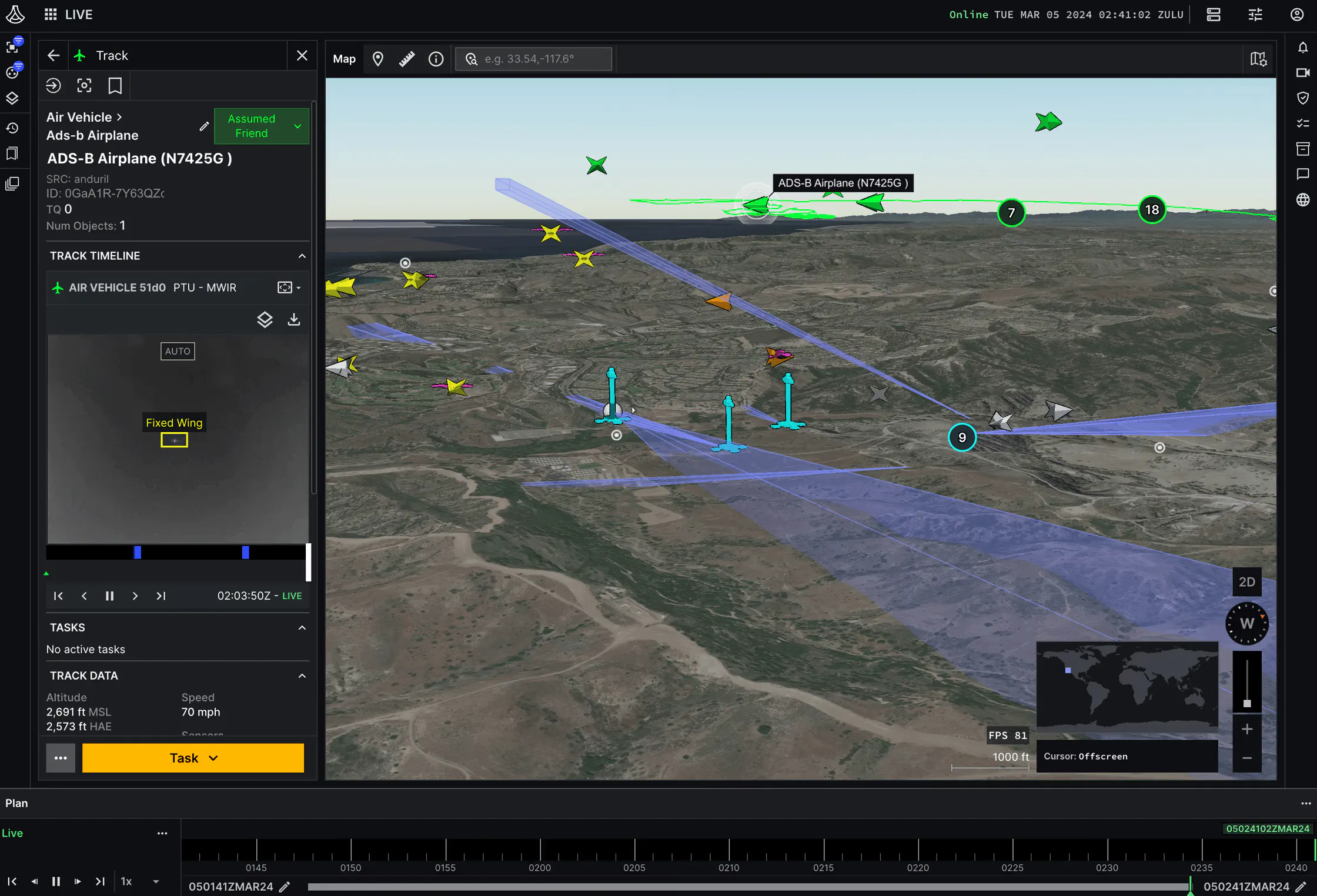
When Anduril talks about being “software-defined, hardware-enabled,” the software that is doing the defining is Lattice. Lattice is Anduril's AI-powered software operating system, designed to be sensor, network, and system agnostic. It ingests data from disparate, distributed sensors, feeds, and systems and fuses it into a single integration layer. From there, AI, machine learning, and sensor processing techniques filter high-value information to human operators, who can react by tasking other systems, such as sensors, vehicles, and weapons, directly through the platform.
The goal of the product is to “boost [a warfighter’s] situational awareness and relevant decisionmaking to superior levels compared to the adversary” without having to put them in a militarized exoskeleton. Brian Schimpf has described it as “an à la carte umbrella where everything works together, very similar to AWS," with different components available as needed. However, the platform has a wide range of use cases, not just for the defense industry but in a multitude of civilian industries. Anduril describes Lattice’s commercial uses as follows:
“ … managing ground and maritime surveillance sensors deployed at ports or critical infrastructure sites such as power plants, solar, and wind farms; managing teams of unmanned aircraft systems for public safety, search and rescue, or pipeline monitoring in the oil and gas sector; and intelligent detection and mitigation of unmanned aircraft systems and other airborne threats near airports, private space launch facilities, oil fields, gas pipelines, and other critical infrastructure.”
The original inspiration for Lattice, according to a Tablet Magazine profile on Palmer Luckey in August 2024, came from Laplace's Demon, a 19th-century thought experiment by Pierre-Simon Laplace proposing that a sufficiently powerful being, knowing the position and motion of every particle in the universe, could predict the future. This thought experiment led Palmer to ask the question that would ultimately lead to the creation of Lattice:
“What does it take to build an artificial being that is perceptive enough... that it can predict not just what's happening now, but what's going to happen 10 seconds from now, 10 minutes from now? If you can reliably do that, even to a statistically relevant degree, that’s a really powerful military tool.”
As described by Brian Schimpf, Lattice delivers three core functionalities
Sense-Making: Using sensor fusion, computer vision, edge computing, and AI to detect, track, and classify every relevant object in the battlespace, giving operators a real-time common operating picture.
Decision Support: A user interface that enables people to make fast, informed decisions based on that sense-making.
Autonomous Execution: Routing decisions to hardware assets like drones, inceptors, and sensors to close kill chains.
Lattice’s impact in active deployment has been significant, as the data fusion it enables has reportedly allowed some response teams to reduce the time it took to shoot down a cruise missile from 10-15 minutes down to 10 seconds with 98%+ accuracy.
Lattice Mesh
Underlying all of Lattice's capabilities is Lattice Mesh, a decentralized networking layer that is one component of Anduril’s broader Lattice operating system. Lattice Mesh allows units in the field to communicate, process data, and make decisions even in degraded or denied environments.
Unlike traditional centralized systems, Lattice Mesh pushes data processing and coordination out to the tactical edge, meaning that even if connectivity to a central command is severed, units in the field can continue operating. In December 2024, the DoD's Chief Digital and AI Office awarded Anduril a $100 million contract to expand Lattice Mesh capabilities and released a Lattice Software Development Kit, opening the mesh ecosystem to third-party developers for the first time, a significant shift away from the historically closed and siloed nature of defense software. This is part of the DoD’s broader strategy to modernize military software and create interoperable systems.
Lattice Comand & Control (C2)
Built on top of that networking infrastructure, Anduril offers two Lattice solutions. The first is Command & Control, Anduril's original and foundational product, which provides operators with a unified interface to fuse sensor data, understand the battlespace, and direct assets to close kill chains. Anduril describes the product as a “single pane of glass” that can “help human operators understand the world around them for faster and better decision-making.”
Lattice Mission Autonomy
Source: Anduril
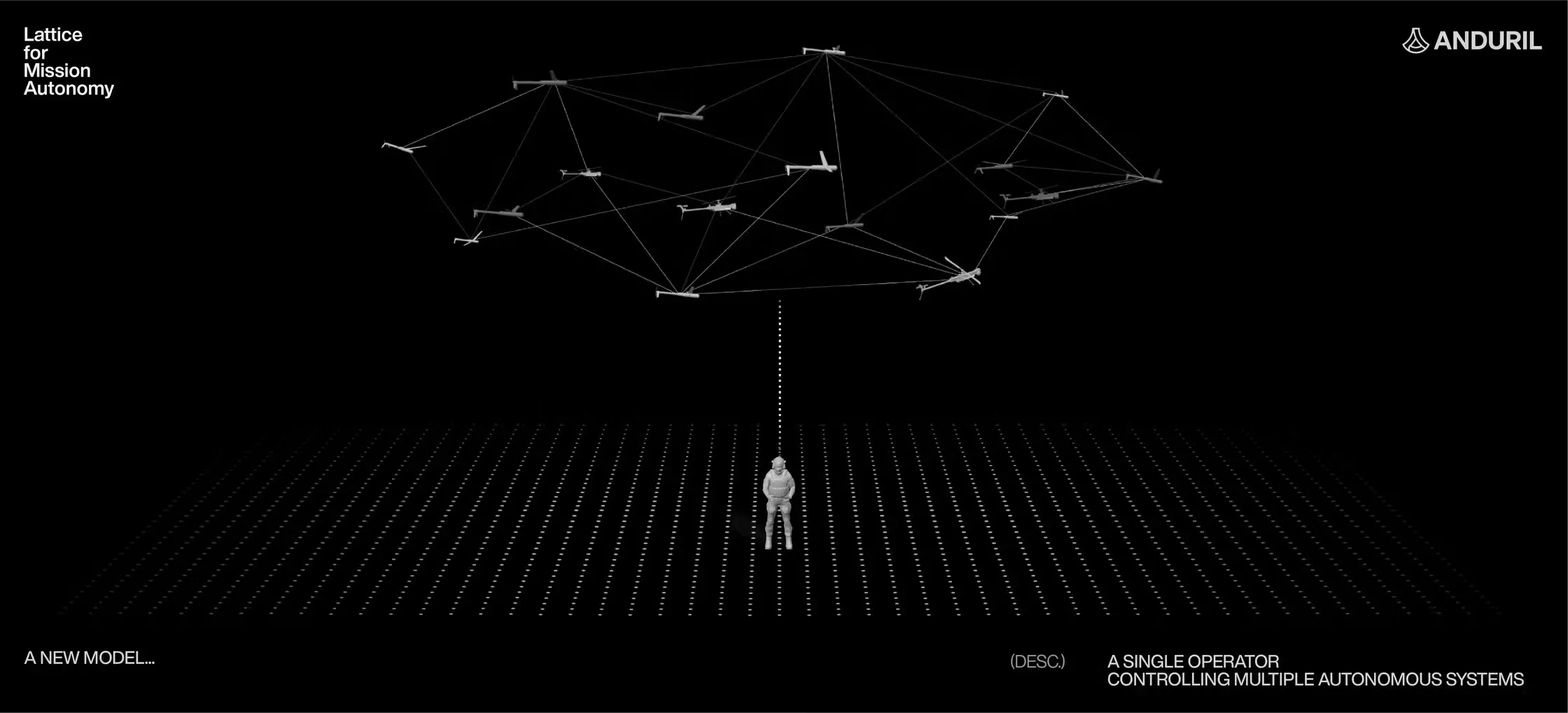
The second Lattice solution is Mission Autonomy, launched in May 2023. Mission Autonomy extends C2 further by enabling teams of diverse autonomous systems to execute complex missions dynamically under human supervision, without requiring an operator to micromanage each asset.
Command Centers
Menace
Source: Anduril
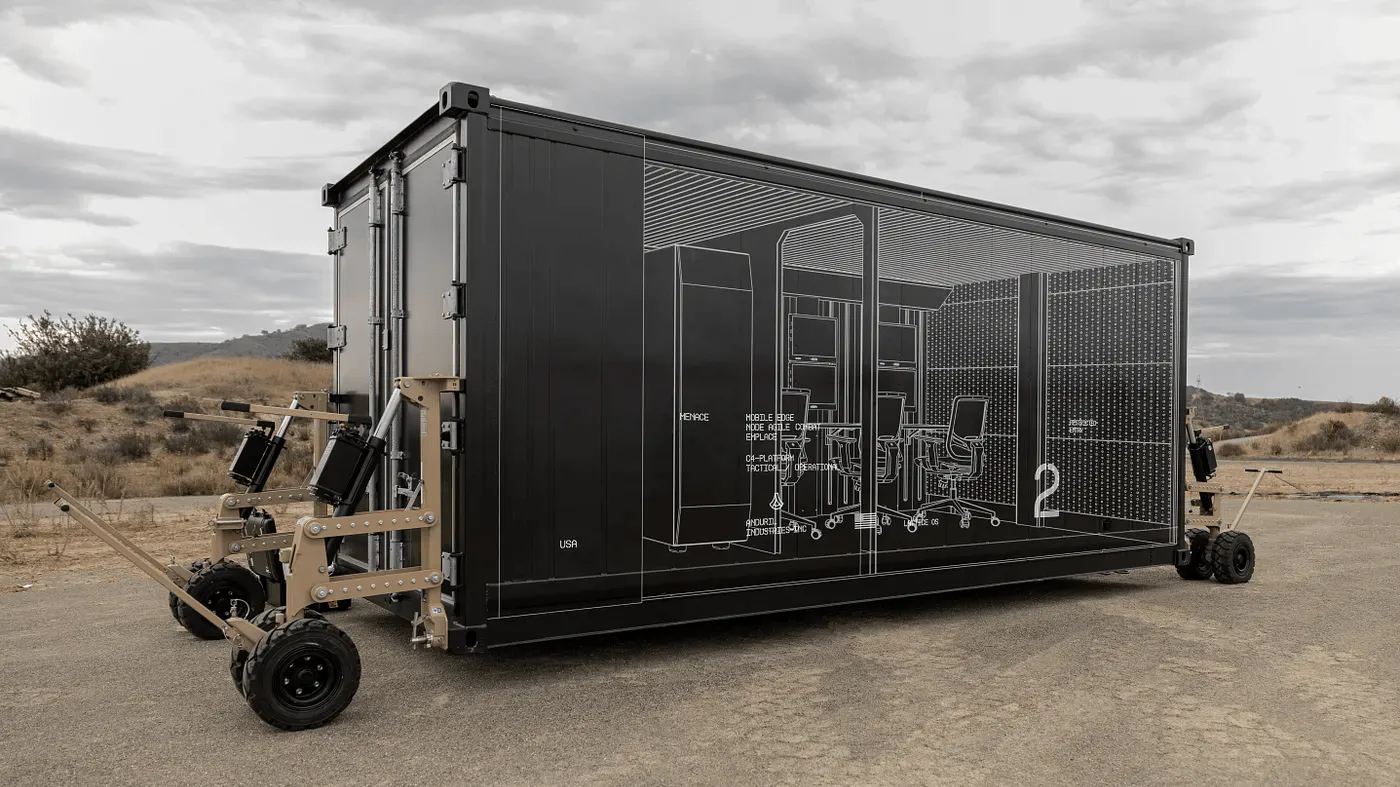
Launched in September 2022, Menace is an expeditionary (i.e., meant to be deployed in the field) command, control, communications, and computing (C4) platform designed to bring Lattice to the tactical edge in environments where traditional operations centers don't exist. As Anduril described it when Menace was announced:
“Menace is designed to be flexible and expeditionary to meet Air Force requirements. Menace is transportable via the air on a single C-130. It can be set up with two people and be online and fully operational within 10 minutes of emplacement.”
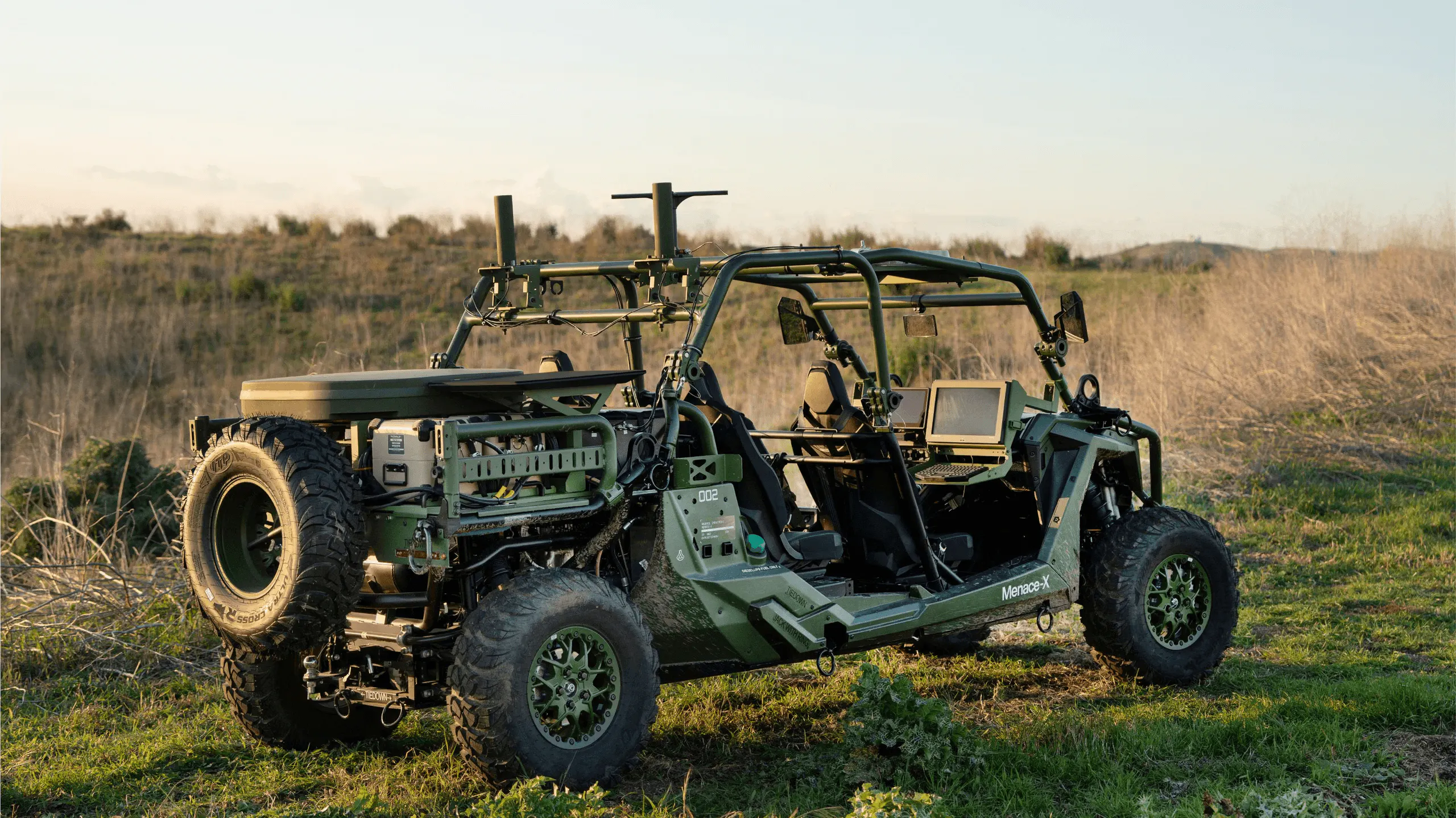
Source: Anduril
In April 2024, Anduril launched Menace-X, a more mobile second iteration built to operate in denied, disrupted, intermittent, and limited communication environments where Lattice access is still critical for battlespace analytics, threat detection, and targeting.
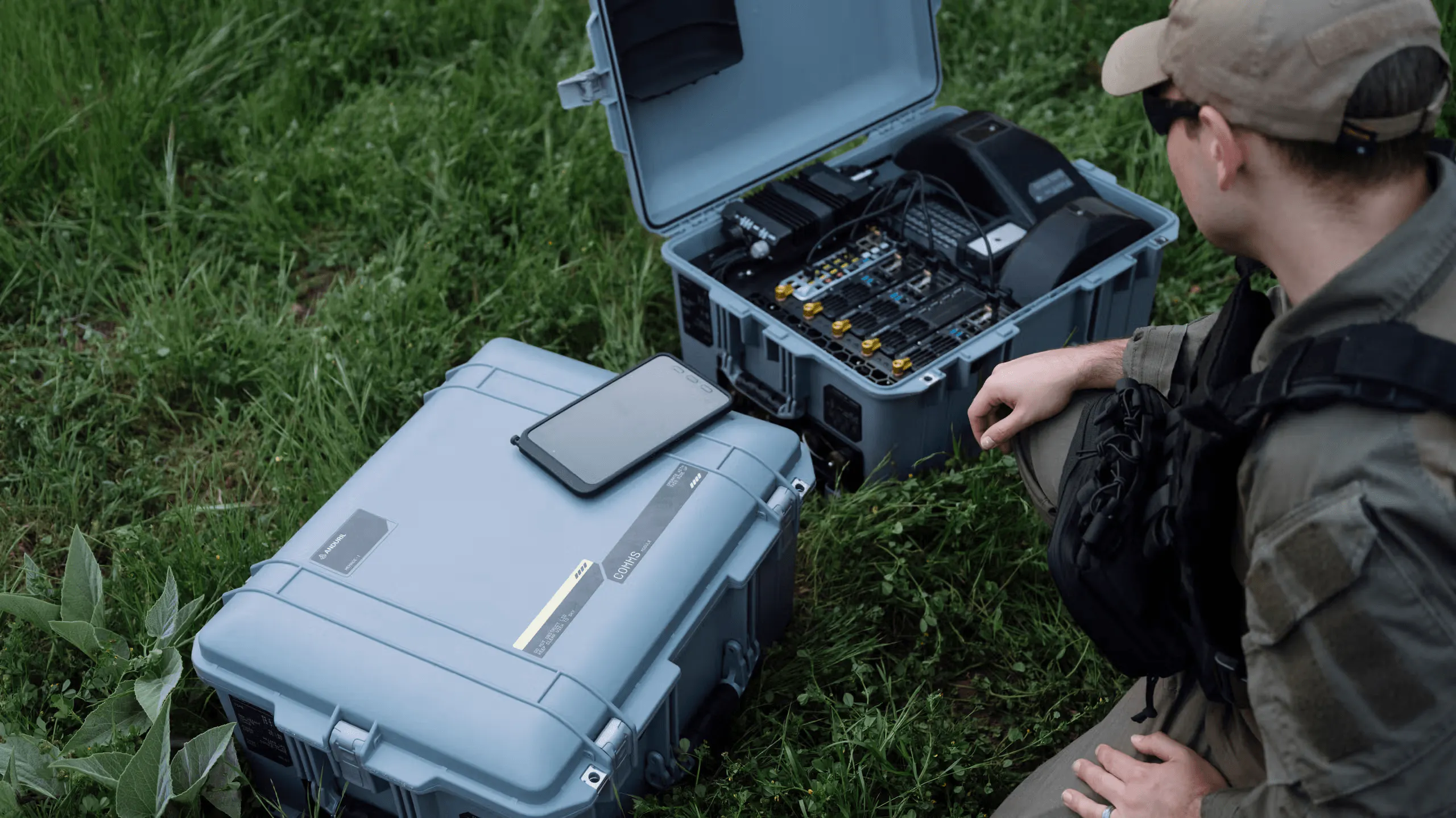
Source: Anduril
Then, in May 2025, Anduril announced the launch of Menace-T: a full-stack operating system for in-field operators. Menace-T is a man-portable, compact variant of Menace that gives reconnaissance teams in the field access to Lattice Mesh, encrypted communications, and real-time targeting data that can be pushed directly to a joint operations center hundreds of miles away.
That same month, the Menace family was selected as the preferred hardware platform for “all forward-deployed Palantir Edge software”, allowing Palantir's software to run natively on Menace hardware integrated directly with Lattice Mesh.
Voyager
Source: Anduril
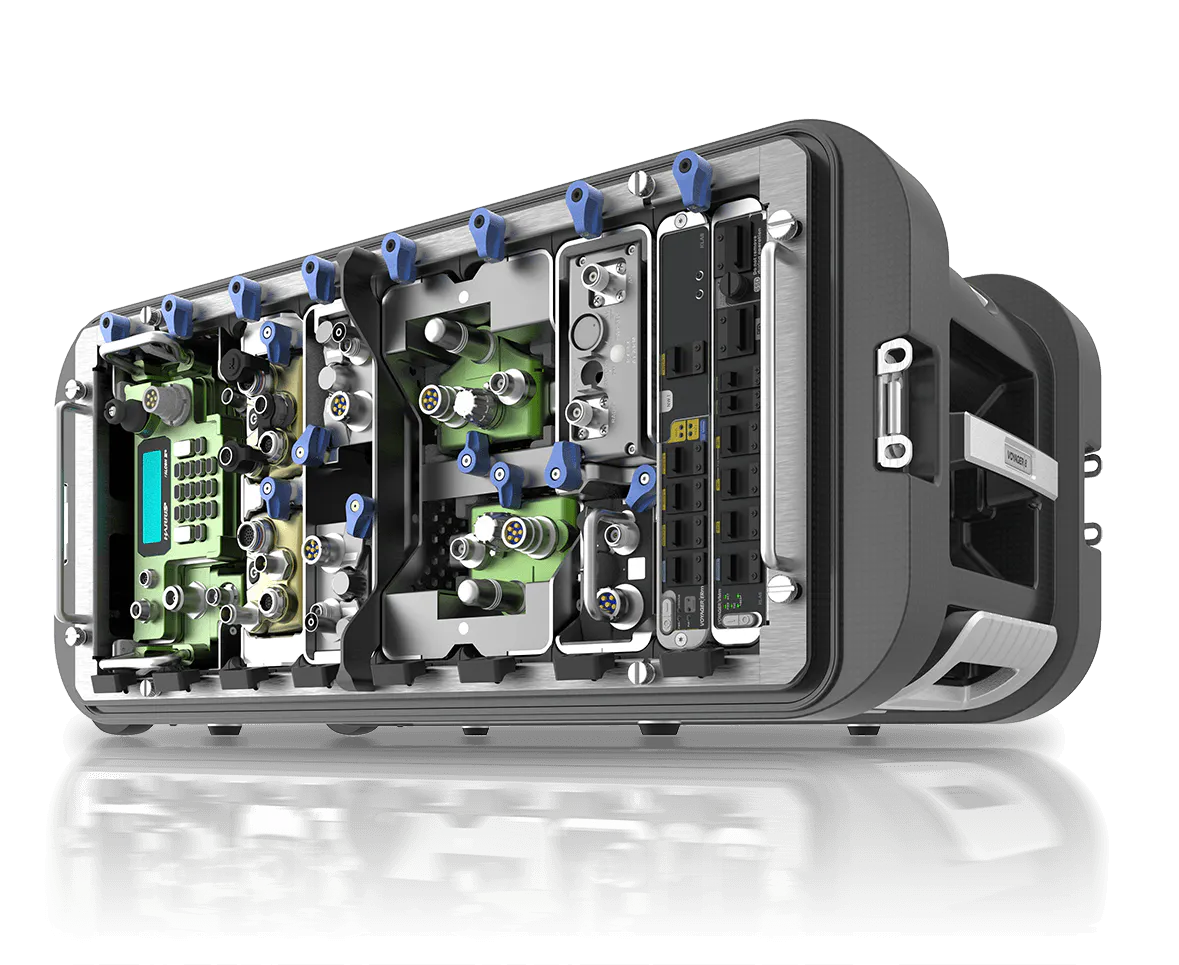
Alongside the Menace family, in May 2025, Anduril announced the acquisition of Klas, a 30-year-old provider of edge computing and tactical communications. Klas' core product, Voyager, develops rugged hardware and software platforms integrating enterprise networking capabilities from companies like Cisco, Dell, and Microsoft. Anduril had reportedly already been using Klas' Voyager technology in some of its products, particularly in the Menace family of products, which have been using Voyager compute and communications.
TITAN
Source: Anduril
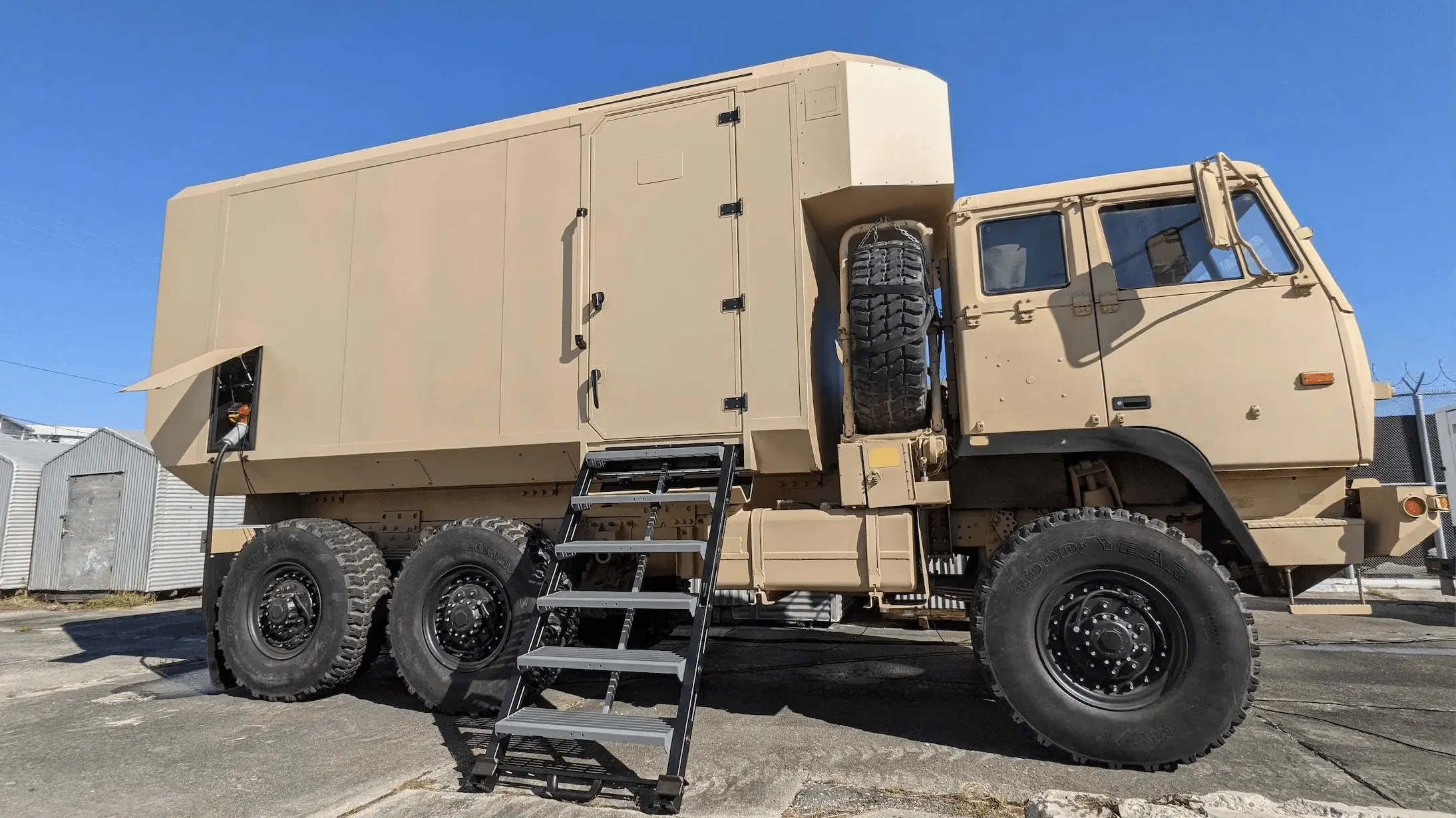
TITAN is a joint project with Palantir that was announced in July 2022 to build a phase two prototype of the Army’s Tactical Intelligence Targeting Access Node (TITAN). Palantir, beating out defense prime RTX, won a US Army contract to TITAN, a ground station system designed to fuse intelligence data from a rapidly expanding array of sensors and deliver real-time targeting decisions for long-range precision fires.
Anduril was brought in as a key partner for the project's maturation phase, alongside Northrop Grumman and L3Harris. By March 2025, the first TITAN trucks were being delivered to the US Army on time and on budget, a rare accomplishment in defense procurement. The original contract was valued at $178 million for 10 prototypes, with full-rate production potentially expanding the program to 100 to 150 units worth over $2 billion.
Space Domain Awareness Network (SDANet)
Source: Anduril
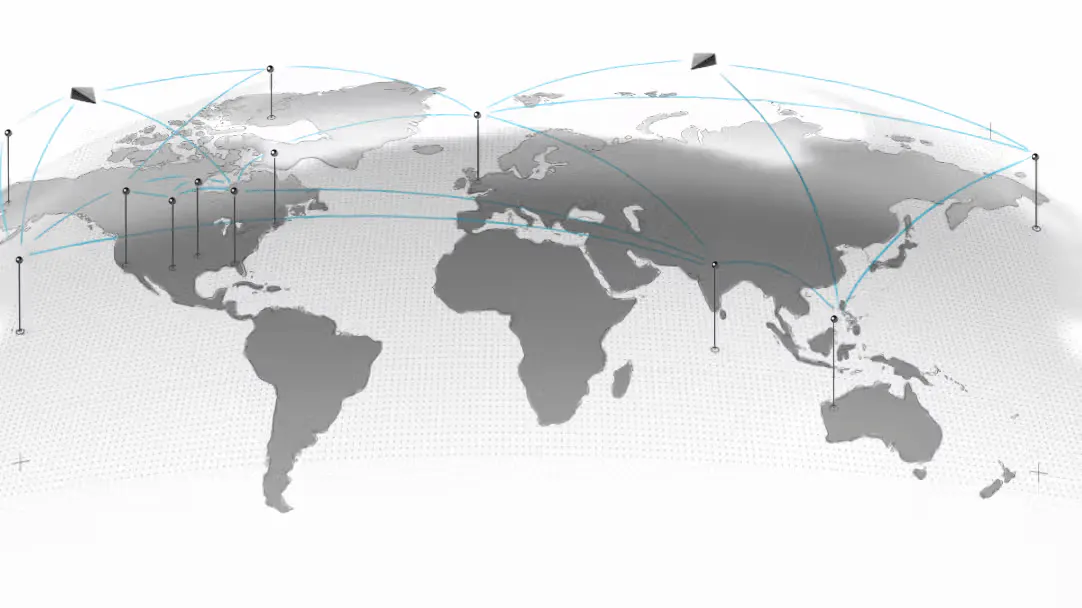
In November 2024, Anduril was awarded a $99.7 million contract and a five-year Program of Record by the US Space Systems Command to “deliver Lattice as a resilient mesh networking capability for the modernization of the U.S. Space Surveillance Network (SSN).”
As autonomous systems have become increasingly common, networking has started to emerge as a critical piece of the modern battlefield. In fact, some see connectivity to the network as having become “as important to war as supply lines. Anduril partnered with the US Space Force Space Systems Command to build a more resilient networking capability leveraging the SNN, a network of distributed ground sensor systems that detect and identify objects in space.
The resulting solution, known as Space Domain Awareness Network (SDANet), includes Lattice as a mesh networking layer and is able to leverage multiple SSN assets globally. SDANet is meant to increase connectivity between sensors and systems like Lattice, as well as decrease communications and messaging latency
Sensors
Sensors are quickly becoming ubiquitous across industries, including ocean ports, power plants, solar and wind farms, search and rescue, oil and gas pipelines, airports, and more. For each of these, there is an increasing need to combine, analyze, and filter sensor data into a format users can digest to make critical decisions. As Anduril initially started building out its hardware portfolio, sensors were the first products it offered.
Sentry
Source: Anduril
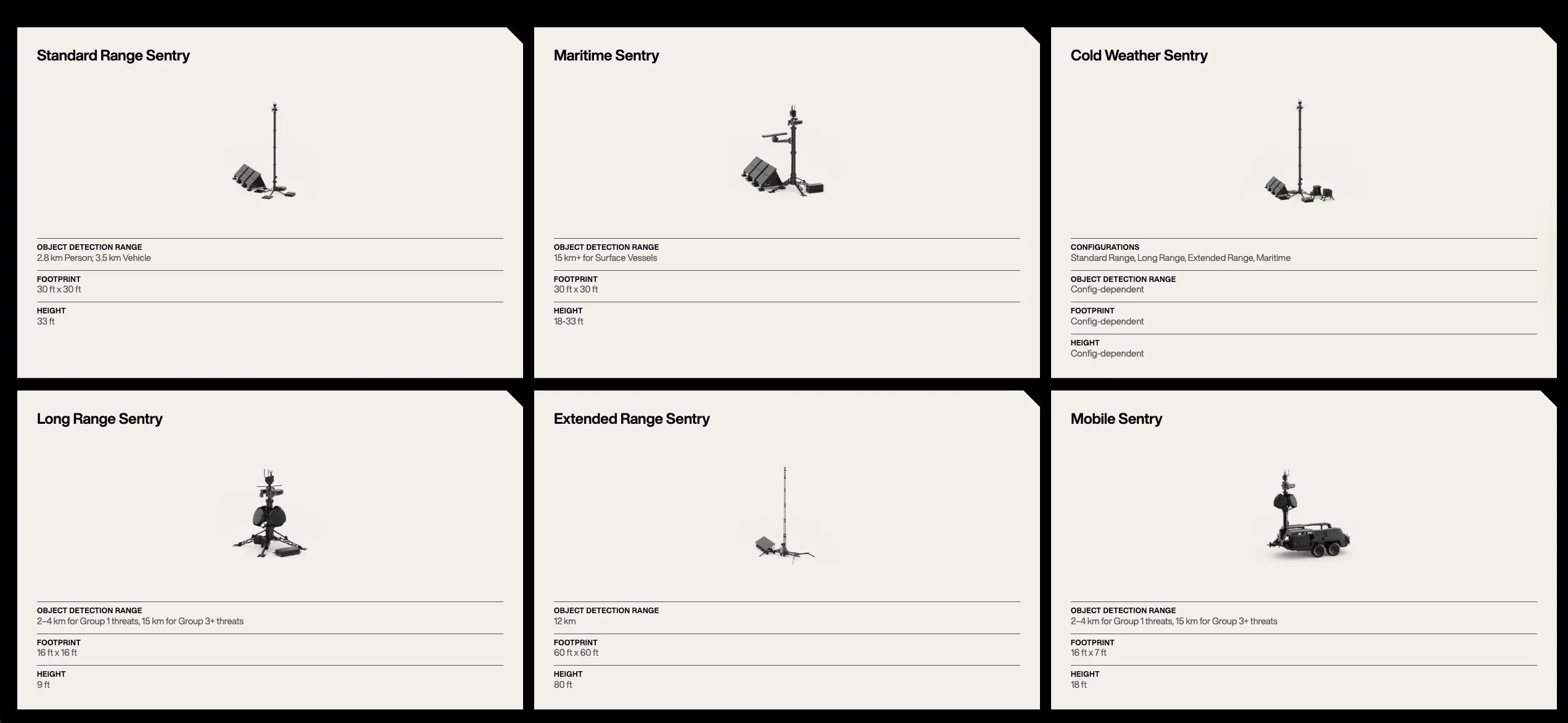
While Lattice was Anduril’s first product and the foundation of its platform, the Sentry tower was Anduril’s first hardware product. The initial concept was for a “surveillance tower using off-the-shelf sensors and cameras” connected to a network, in order to secure forward operating bases or outposts in hostile territory. However, Palmer Luckey had the idea to use them for border security. The product went from idea to prototype in a matter of months.
Among Sentry’s first customers was a private ranch owner in Texas, after which hundreds of Sentry towers were purchased by the US Customs and Border Patrol agency for use across the southern border of the US. In 2020, Anduril was awarded a program of record (POR), which describes a program formally approved and funded by the US government, for its work on the border. This was reportedly the fastest a POR has been established for several decades, getting awarded within twelve months, and made Anduril the youngest company to receive a POR since the Korean War.
By September 2024, there were 300 Sentry towers on the US Southern Border. As of February 2025, Anduril’s Sentry Towers were reportedly covering 600 miles of the US’ southern border, representing 30% coverage. Since its original launch, the Sentry Tower product has expanded to include six versions: (1) standard range, (2) long range, (3) extended range, (4) maritime, (5) mobile, and (6) cold weather.
Seabed Sentry
Source: Anduril
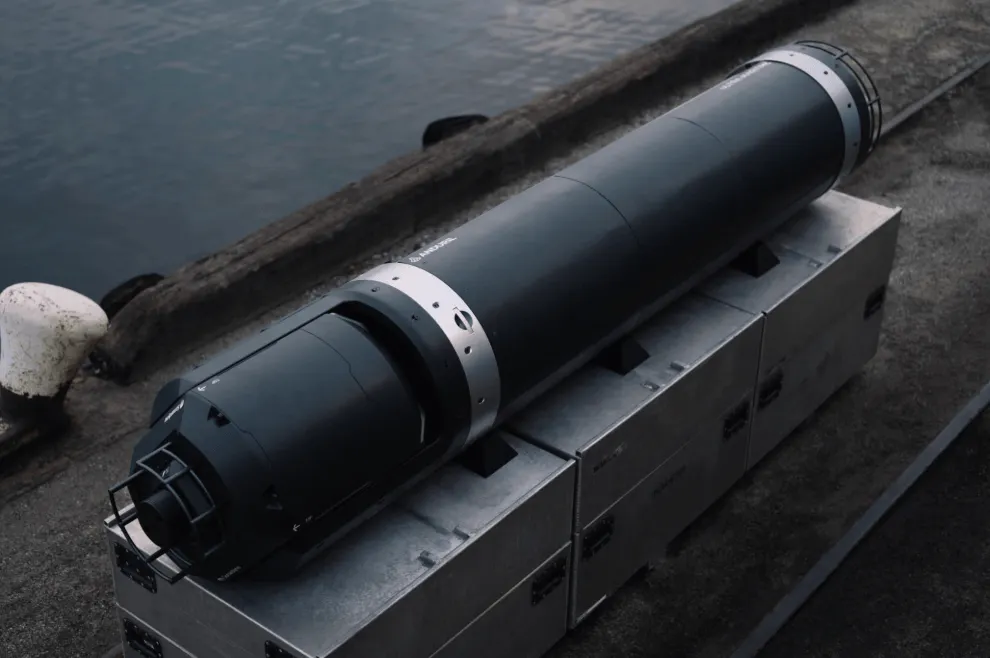
In April 2025, Anduril announced the launch of Seabed Sentry, a series of “AI-enabled, mobile, undersea sensor nodes networked together for persistent monitoring and real-time communication.” The product’s function is similar to Anduril’s Sentry series of sensor towers and can be deployed at depths “exceeding 500 meters” by autonomous underwater vehicles (AUVs) like Anduril’s Dive-XL. Seabed Sentry also has a small payload capacity.
Seafloor surveillance systems have historically been used to monitor undersea activity, secure maritime chokepoints, and detect submarines or unmanned underwater vehicles. However, these devices have proven expensive to place and maintain. In the past, the US Navy has relied on the Sound Surveillance System (SOSUS), a Cold War-era network of undersea hydrophones designed to detect Soviet submarines. The limitations of SOSUS have been its fixed placement, making it less effective with quieter or more mobile threats. Companies like L3Harris have tried to advance these types of devices with Distributed Acoustic Sensing (DAS).
Other Sensors
Source: Anduril
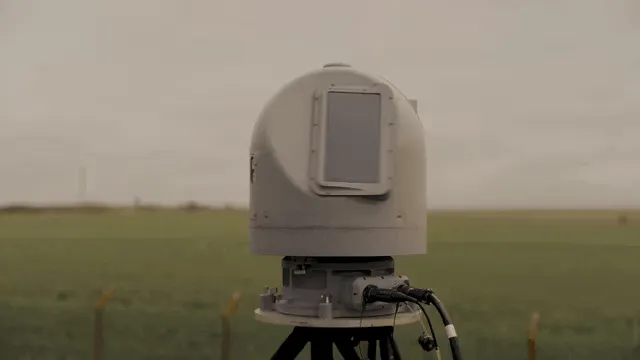
Other sensors that Anduril offers include the following:
Wisp: Wisp, which stands for “Wide-Area Infrared Sensing with Persistence”, is a sensor that Anduril says “emits no signal and cannot be jammed, enabling radar-like detecting without detection.” A lack of radiation emissions makes WISP a good fit for stealthier missions where operators are focused on avoiding detection. The size of the product also makes its placement versatile, making it possible to place the device “on ships, Sentry Towers, tactical vehicles, or on the ground.”
IRIS: Iris, announced in February 2024, built on the success of the WISP sensor. It is a “family of airborne imaging and targeting sensors designed to autonomously detect and track hundreds of targets at long ranges in contested environments,” intended to support airborne combat applications such as infrared search and missile warning and targeting. In addition, Iris is a passive sensor, which means it doesn’t give off significant radiation and therefore is not easily detected or disrupted while in contested environments.
Spyglass & Spark: Spyglass and Spark are proprietary radar platforms that Anduril acquired from Numerica in January 2025, which are “designed for short-range air defense and vehicle protection missions and are actively deployed by the U.S. Department of Defense.”
Unmanned Aerial Systems (UAS)
As the global conflict landscape has shifted from favoring larger assets, such as cruise missiles, to higher-volume, lower-cost assets, drones have become increasingly viable. As Brian Schimpf has explained, drones can perform a function similar to that of cruise missiles at a tenth of the cost, which is why the US government’s 2027 spending plan increased funding for military drones and counter-drone weapon systems to $70 billion, up from $16.5 billion the prior year.
Anvil
Source: Anduril
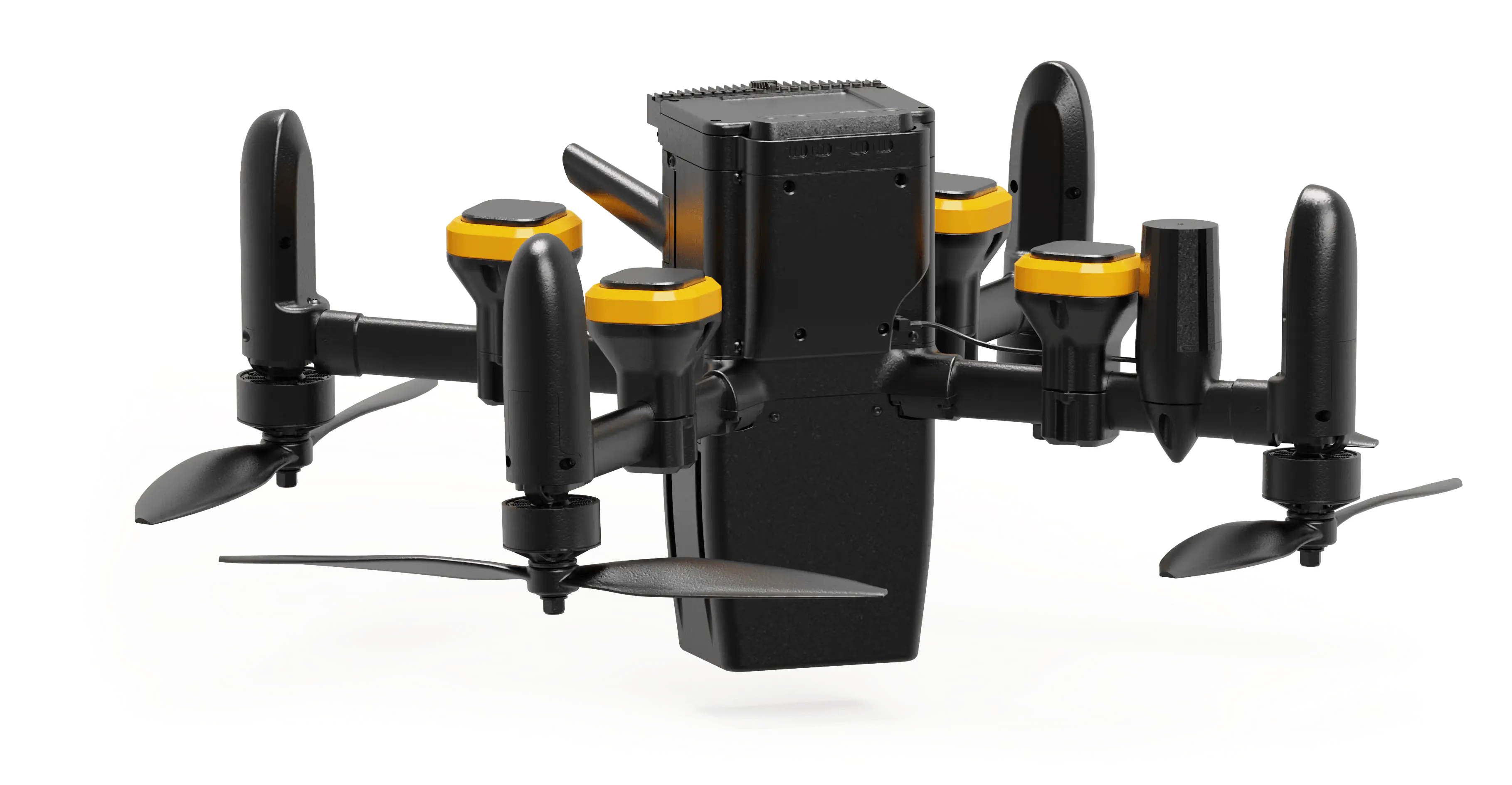
Anvil is an autonomous air interceptor that “navigates autonomously to intercept potential drone threats and provide visual feedback for positive identification by a human operator.” A member of Anduril’s counter-UAS family of systems, it was initially described as a “battering-ram drone system” when it launched in October 2019. Anduril describes its Anvil platform as a “ground launched, low-collateral rotary wing interceptor.”
Source: Anduril
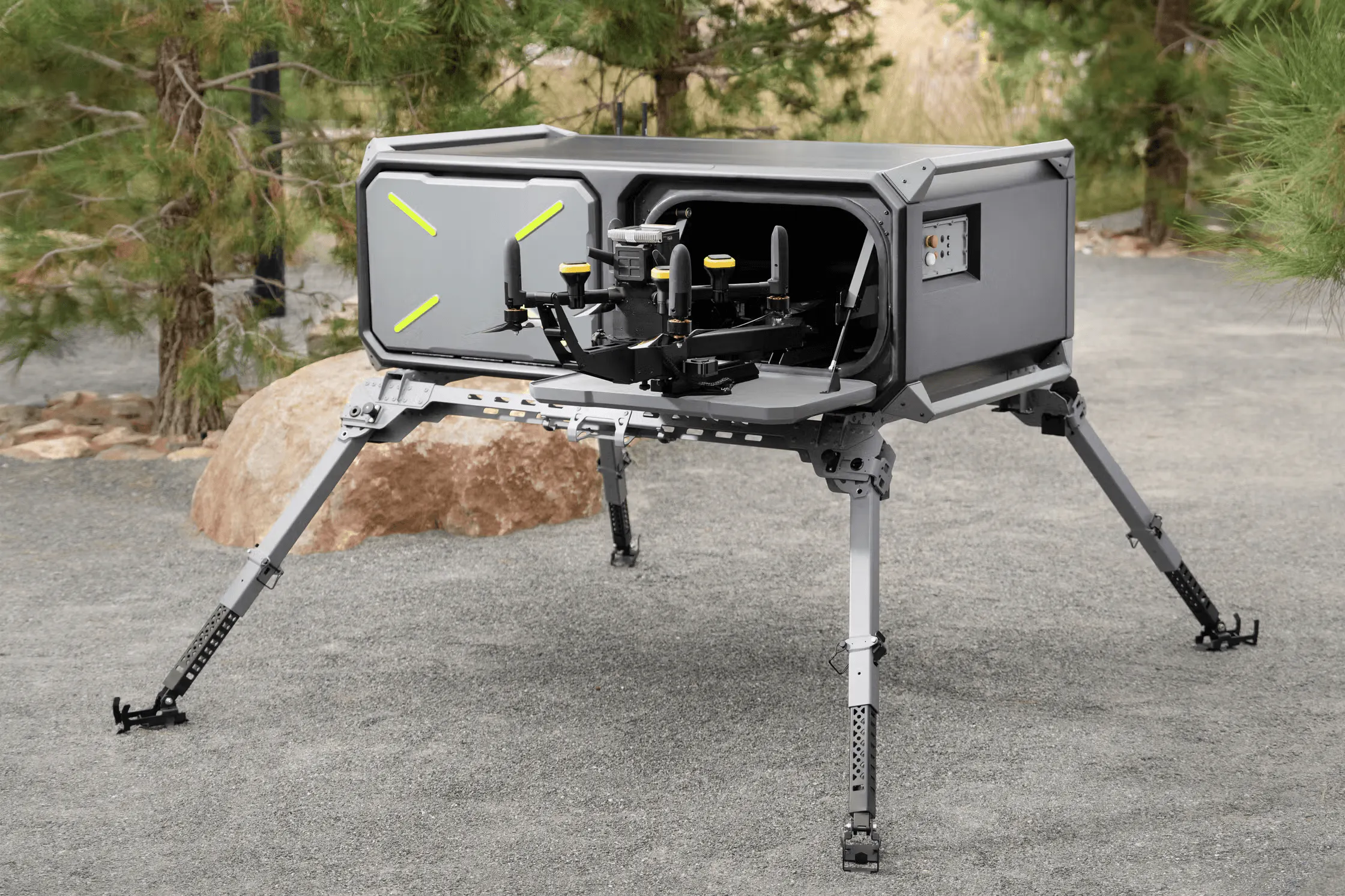
Four years later, in October 2023, Anduril launched Anvil-M, which it described as a “munition variant” of the intercepter platform. Anvil-M is equipped with a munitions payload and was described by Anduril as the “most lethal variant of Anduril’s interceptor platform” that is designed to “more reliably and effectively engage and defeat higher-end, faster moving group-2 threats”.
Anvil comes with an integrated Launch Box, which is a “ruggedized, self-contained, transportable ground support system” that can hold two Anvil drones. It can be set up to deploy as soon as a threat is detected via Lattice.
Ghost
Source: Anduril
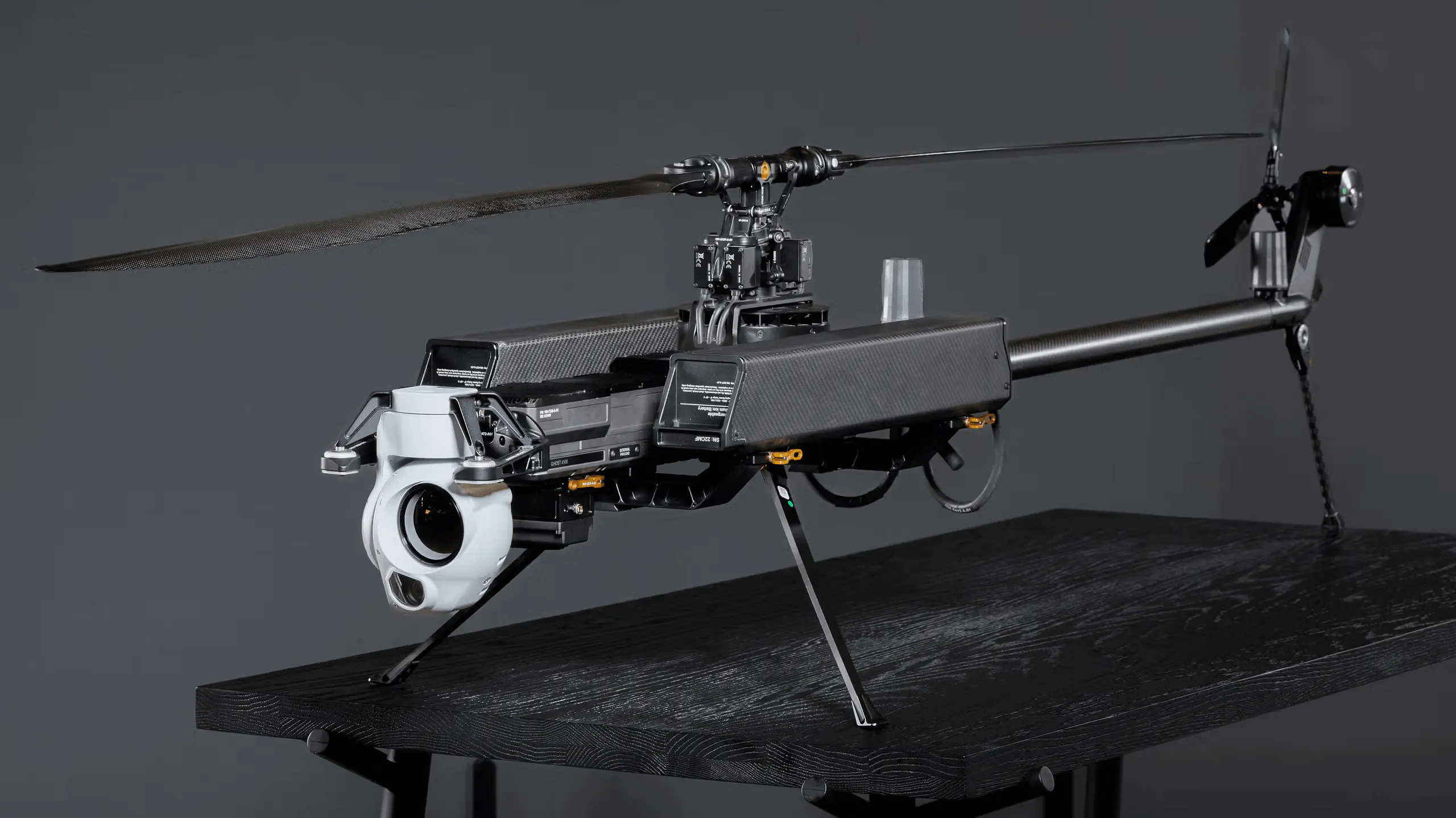
Ghost is a drone that Anduril describes as “an expeditionary, quiet, and modular platform that delivers intuitive autonomy at the tactical edge, balancing extended range and multi-payload capacity with an expeditionary footprint.” Its latest variant, Ghost 4, was announced in September 2020 as “the most intelligent VTOL [vertical take-off and landing] sUAS [small unmanned aircraft system]”.
Ghost 4 is man-portable, designed and manufactured in the US for military ISR and multi-mission operations. Powered by an all-electric drivetrain delivering over 100 minutes of flight time with a near-silent acoustic signature, Ghost runs on Lattice and is capable of performing complex missions, from aerial surveillance and signals intelligence to electronic warfare and cargo delivery, while presenting all actionable data to a single operator without increasing their cognitive load. Its single-rotor design enables precise VTOL from confined spaces on land or at sea, its modular airframe supports field-swappable payloads in seconds, and the entire system can be packed in a rucksack and assembled for takeoff in under a minute.
In September 2023, Anduril announced the launch of a new version of its Ghost product called Ghost-X, which, in comparison to Ghost 4, “increases payload capacity and enhanced flight performance while allowing for advanced options such as long-range resilient communications, vision-based navigation, and alternate gimbals.” Around the same time, Anduril announced that the US Air Force had awarded the company two contracts, worth $8 million, to use Ghost’s platform to work on enhanced autonomy capabilities.
Pulsar
Source: Anduril
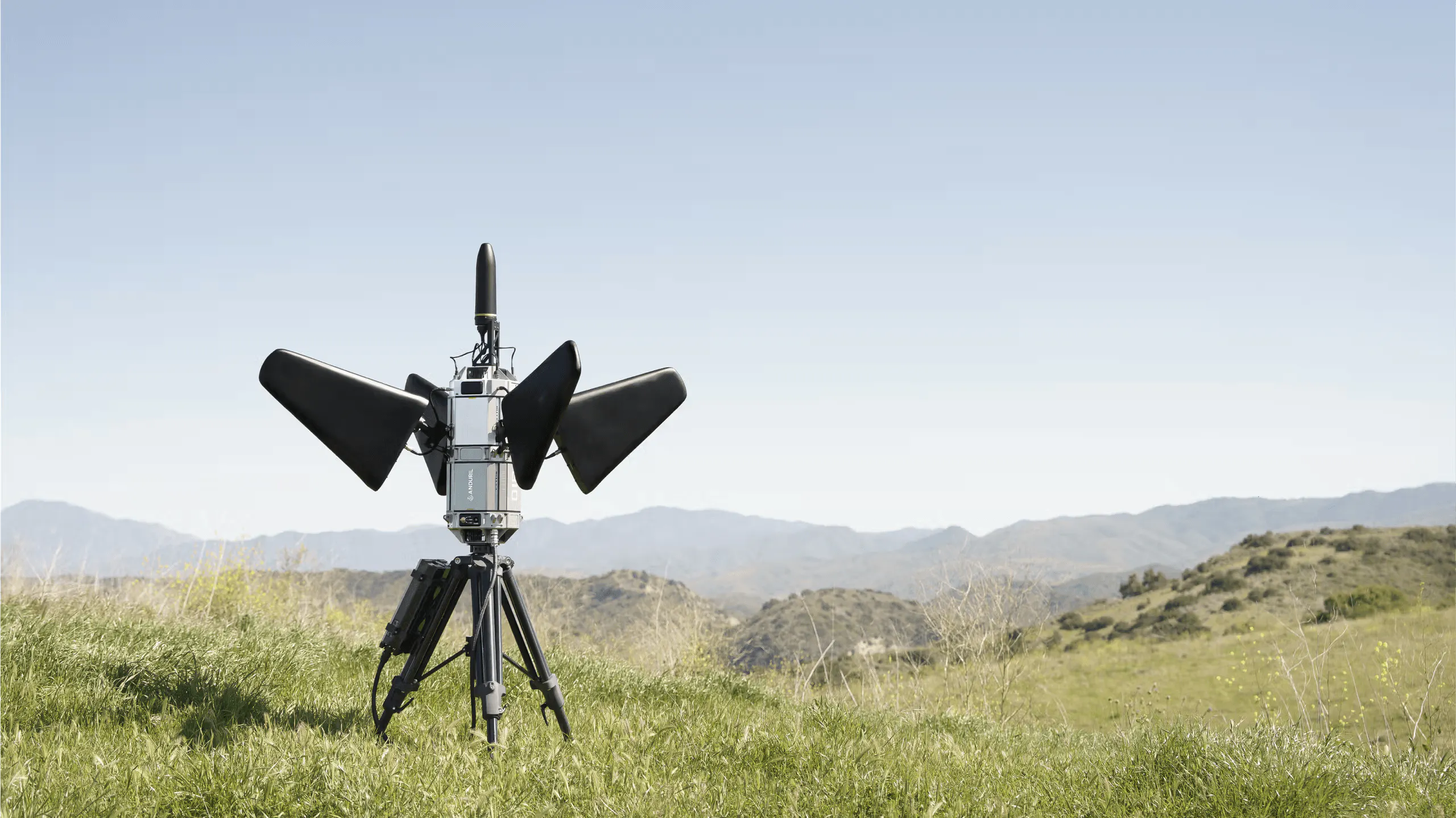
Pulsar, announced in May 2024, is Anduril's family of modular, AI-enabled electromagnetic warfare systems designed to identify and defeat threats across the electromagnetic spectrum, including drones, in real time. Built around software-defined radio and GPU-based compute, Pulsar uses radio-frequency machine learning to autonomously detect both known and anomalous threats at the tactical edge and can deploy new electronic warfare countermeasures in hours and days rather than weeks.
Its capabilities span electronic attack, electronic countermeasures, counter-UAS, direction-finding, geolocation, and electronic support, with modular variants that integrate with ground vehicles (Pulsar-V), aircraft (Pulsar-A), or man-portable (Pulsar-L). Despite its public announcement in May 2024, Anduril had been developing and operationally deploying Pulsar since 2020.
ALTIUS
Source: Anduril
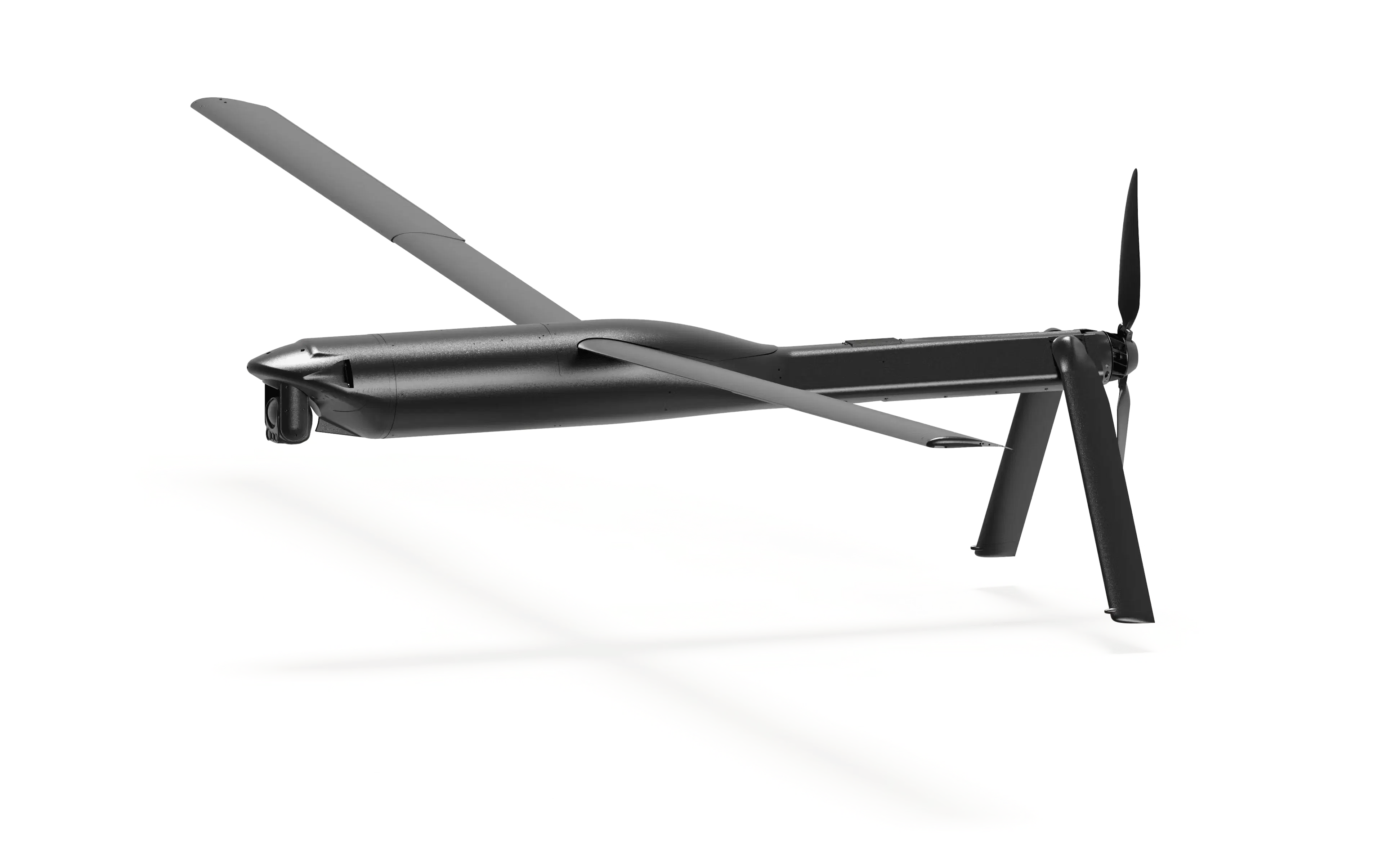
ALTIUS is a long-range strike drone with a modular payload. In April 2021, Anduril announced the acquisition of Area-I, a company that focused on air-launched effects (ALEs). The devices Area-I specialized in were “agile-launched, tube-stored aircraft, such as its Agile-Launched, Tactically-Integrated, Unmanned System (ALTIUS) platform.” ALTIUS is an acronym that also means “higher” in Latin. At the time of the announcement of the Area-I acquisition, Anduril said that Area-I would operate as “a wholly owned subsidiary of Anduril and will continue to operate under the Area-I brand.”
According to Anduril, “ALTIUS can be launched from ground, air, or sea to conduct missions like ISR&T [intelligence, surveillance, reconnaissance, and targeting], RF [radio frequency] decoy, sigint [signals intelligence], comms relay, and cyber warfare.” ALTIUS launches from tubes that can be attached to helicopters, planes, or other vehicles. As of April 2026, ALTIUS is available in four variations: (1) ALTIUS-600M, (2) ALTIUS-600, (3) ALTIUS-700M, and (4) ALTIUS-700.
Autonomous Air Vehicles (AAV)
Roadrunner
Source: Anduril
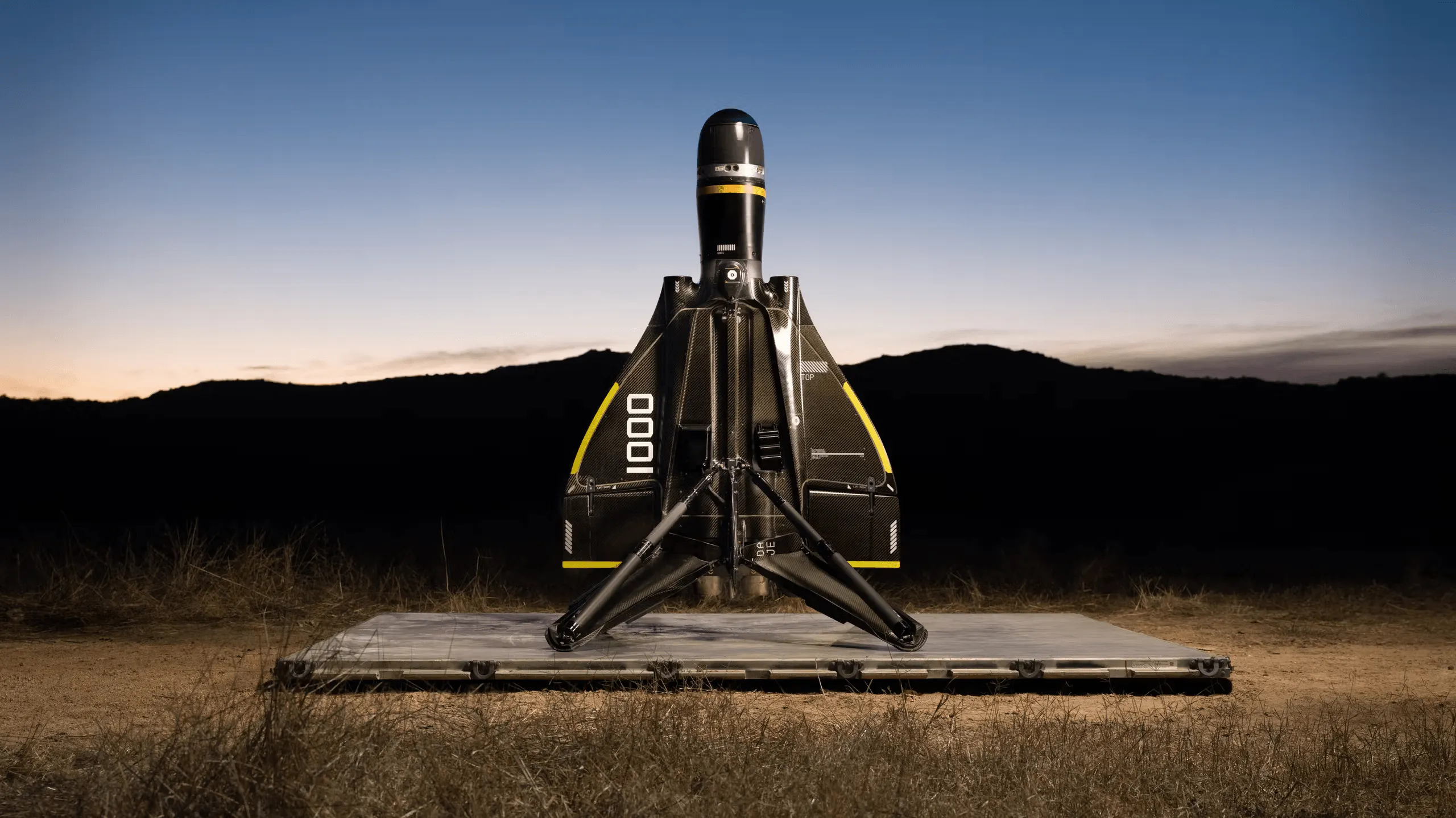
In December 2023, Anduril announced the launch of Roadrunner, a reusable VTOL autonomous air vehicle that costs the “low six figures,” according to Anduril Chief Strategy Officer Chris Brose. Roadrunner is equipped with twin turbojet engines and can support a variety of missions through its modular payload configurations. Roadrunner is deployed by a “networked, automated hangar known as a Nest, which is only slightly larger than the drone and therefore very easy to transport and maintain.”
Roadrunner has a variant, Roadrunner-M, which Anduril describes as a “high-explosive interceptor variant of Roadrunner built for ground-based air defense that can rapidly launch, identify, intercept, and destroy a wide variety of aerial threats.” Palmer Luckey has indicated that Roadrunner-M could be used in response to anything from Iranian Shahed loitering munitions, which have been heavily used in Ukraine and in the Iran conflict, to ‘full-sized’ aircraft.
Anduril named its device “Roadrunner” because Raytheon calls its comparable device “Coyote,” a nod to a classic Looney Tunes rivalry. Palmer Luckey has said that some of Anduril’s product names start as codenames selected by the company's engineers, before becoming the products’ official names when customers get too attached. According to Brian Schimpf, Roadrunner went from a napkin sketch to fielding in about two years, compared to Raytheon’s Coyote, which took seven years to field.
Fury
Source: Anduril
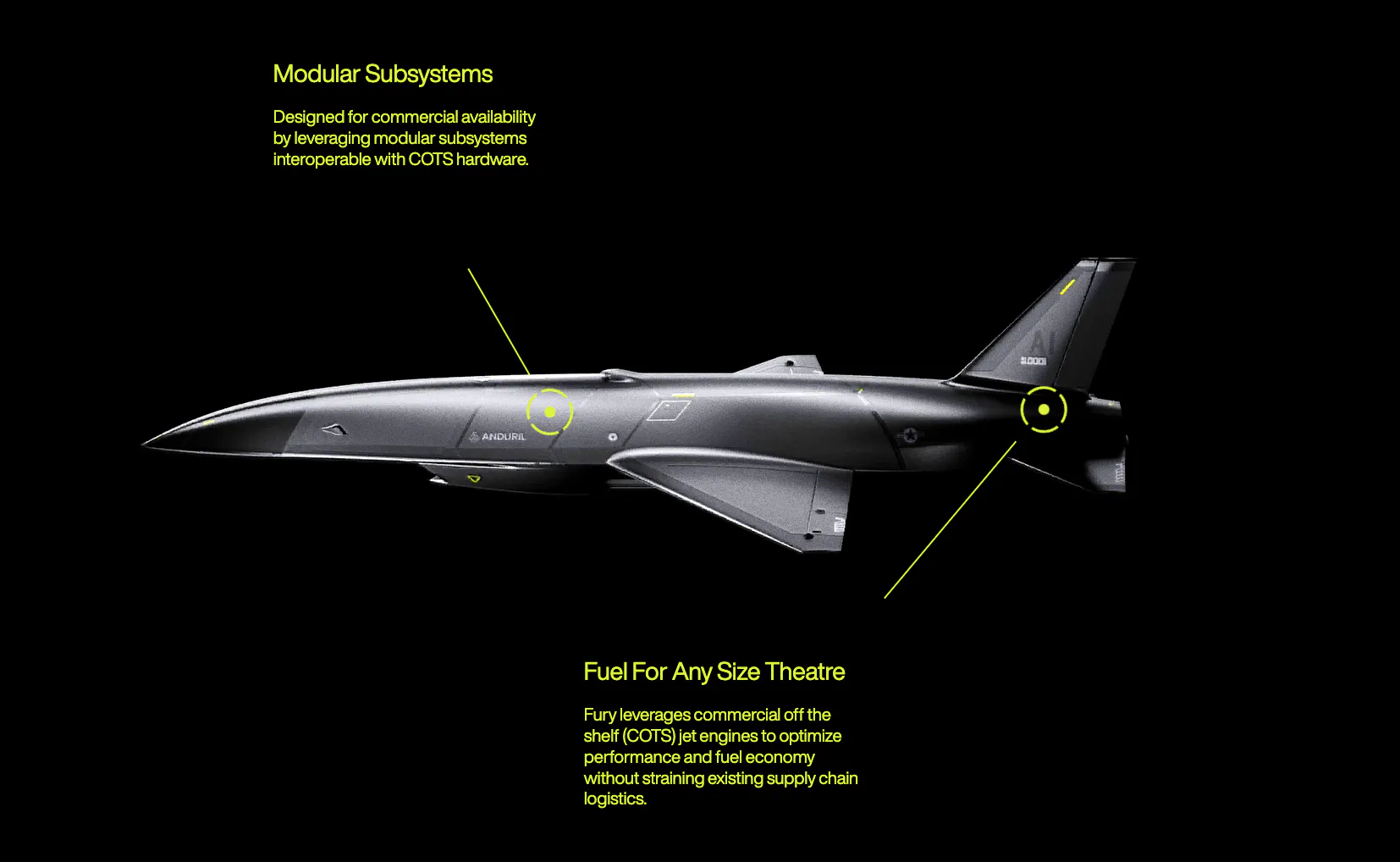
Fury (formally designated YFQ-44A) is Anduril's semi-autonomous “collaborative combat” aircraft, designed as a high-performance, unmanned jet that can either operate independently or team up with crewed aircraft. According to Anduril, YFQ-44A was “not designed to be a remotely-piloted aircraft”, and is capable of executing a mission plan on its own, with both in-flight control and landing conducted “independent of human command” while remaining “under the watchful eye of an operator”.
Fury uses a single 4K-pound thrust-class turbofan engine, can reach altitudes of 50K feet, and can achieve speeds of Mach 0.95. The plane is roughly 20 feet long and has a 17-foot wingspan. For comparison, its size makes it much smaller than the F-35A fighter, which measures 51 feet long and has a 35-foot wingspan. As Anduril describes it, “YFQ-44A is designed to gain and maintain air superiority in highly contested environments through a focus on autonomy and affordable mass,” indicating a focus on making the drone both scalable and performant. Reportedly, Fury’s ability to act as a wingman enables it to be used for surveillance, bombing missions, and attack drones.
The aircraft traces its origins to Blue Force Technologies, which Anduril acquired in 2023, and was adapted to compete in the US Air Force's Collaborative Combat Aircraft (CCA) program, a competition Anduril won the first phase of in April 2024 alongside General Atomics, beating out Boeing, Lockheed Martin, and Northrop Grumman in a watershed moment for the industry. Built around a commercial jet engine and designed with mass production in mind from the outset, Fury went from clean-sheet design to first flight in 556 days, completing its first semi-autonomous test flight in October 2025 and entering serial production at Arsenal-1 in Ohio in March 2026, three months ahead of schedule, with the goal of producing 50 aircraft per year in that factory alone.
Barracuda
Source: Anduril
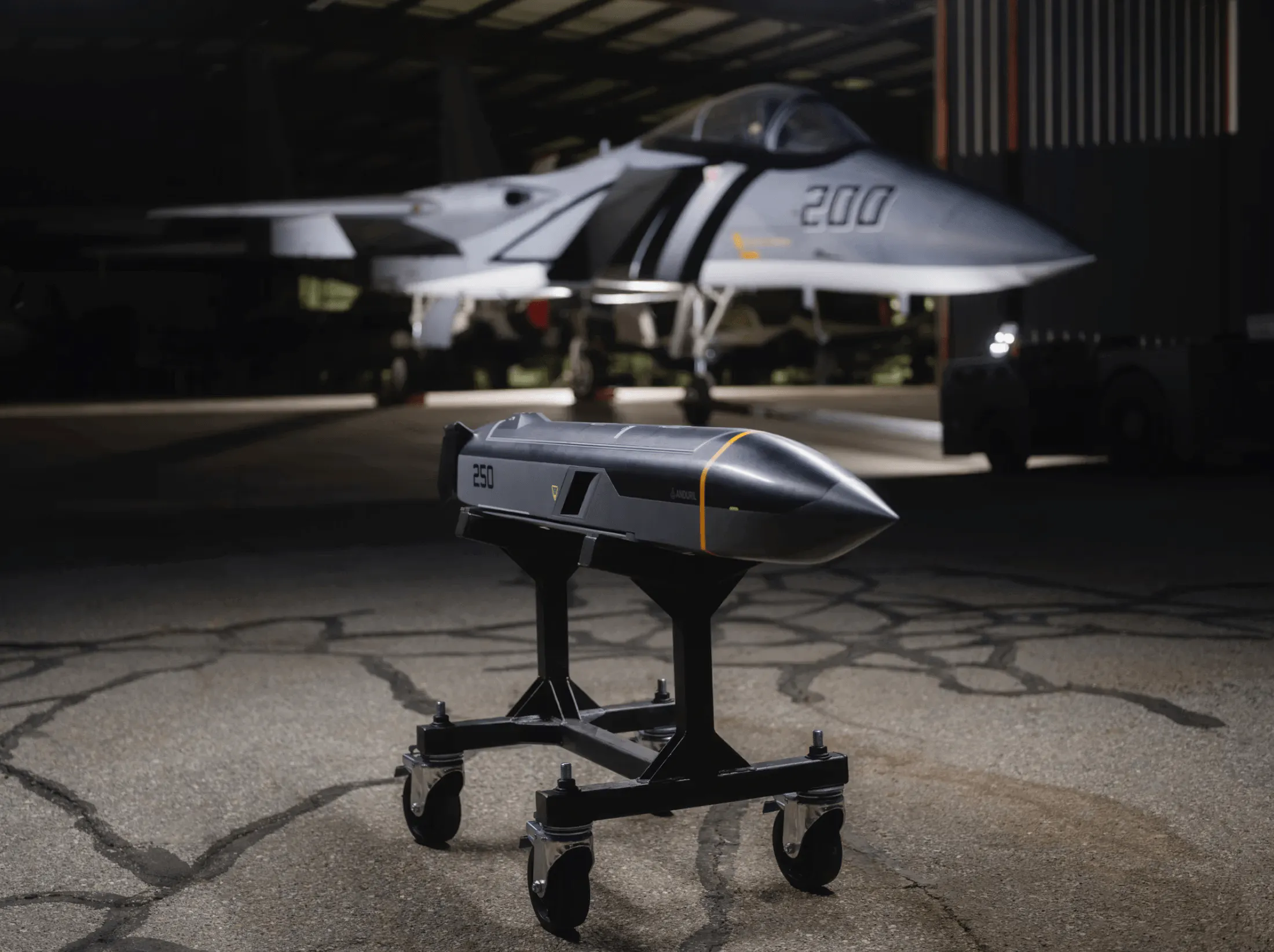
Barracuda is Anduril’s missile product, which it describes as a “family of air-breathing, software-defined expendable Autonomous Air Vehicles (AAVs) that are optimized for affordable, hyper-scale production”. When it announced the launch of Barracuda in September 2024, Anduril explained the rationale behind the product as follows:
“The United States and our allies and partners do not have enough missiles to credibly deter conflict with a near-peer adversary. Our existing arsenals of precision-guided munitions would be exhausted in a matter of days in a high-end fight. The problem extends beyond inventory alone, however: existing cruise missiles are defined by limited production capacity, nonexistent on-call surge capacity, and minimal upgradeability when technology and mission needs inevitably change. That is because existing missile designs are highly complex, require thousands of unique tools to produce, demand highly-specialized labor and materials, and are built on the backs of tenuous, brittle, and defense-specific supply chains. We need an order of magnitude more weapons, and we need them to be more producible, intelligent, upgradeable, and flexible.”
Nowhere was this thesis more perfectly born out than in the US-Iran conflict, which broke out less than two years after the Barracuda’s launch; in April 2026, a little more than a month into the conflict, the US had reportedly burned through half of its Patriot missile interceptors, over 850 Tomahawk cruise missiles, and between 190 and 290 Terminal High Altitude Area Defense (THAAD) interceptors.
Not only would replacing these munitions take years, illustrating Anduril’s point about how easily the US’s precision-missile stockpile could be exhausted, but the missiles themselves are incredibly costly (millions of dollars each), whereas the inexpensive drones they were being used to counter cost tens of thousands. As Congressman Ted Lieu put it, “One patriot missile costs between $4 and $4.5 million. An Iranian drone costs about $30,000 - $50,000. We cannot keep throwing Ferraris at frisbees.” This was a sentiment Palmer Luckey emphatically endorsed, saying, “Ted is 100% right.”
Barracuda is designed to “rebuild America’s arsenal of air-breathing precision-guided munitions and air vehicles”. It has autonomous capabilities, and the Barracuda family contains six variants as of April 2026. Barracuda-100 and Barracuda 100M travel at speeds of between 200-500 knots (kts) and have greater than 120 nautical miles (nm) of range. Barracuda-250 and Barracuda-250M travel at ~180-500 kts and have a range of more than 200 nm. Finally, Barracuda-500 and Barracuda 500-M travel at ~190-500 kts and have a range exceeding 500 nautical miles.
Bolt
Source: Anduril
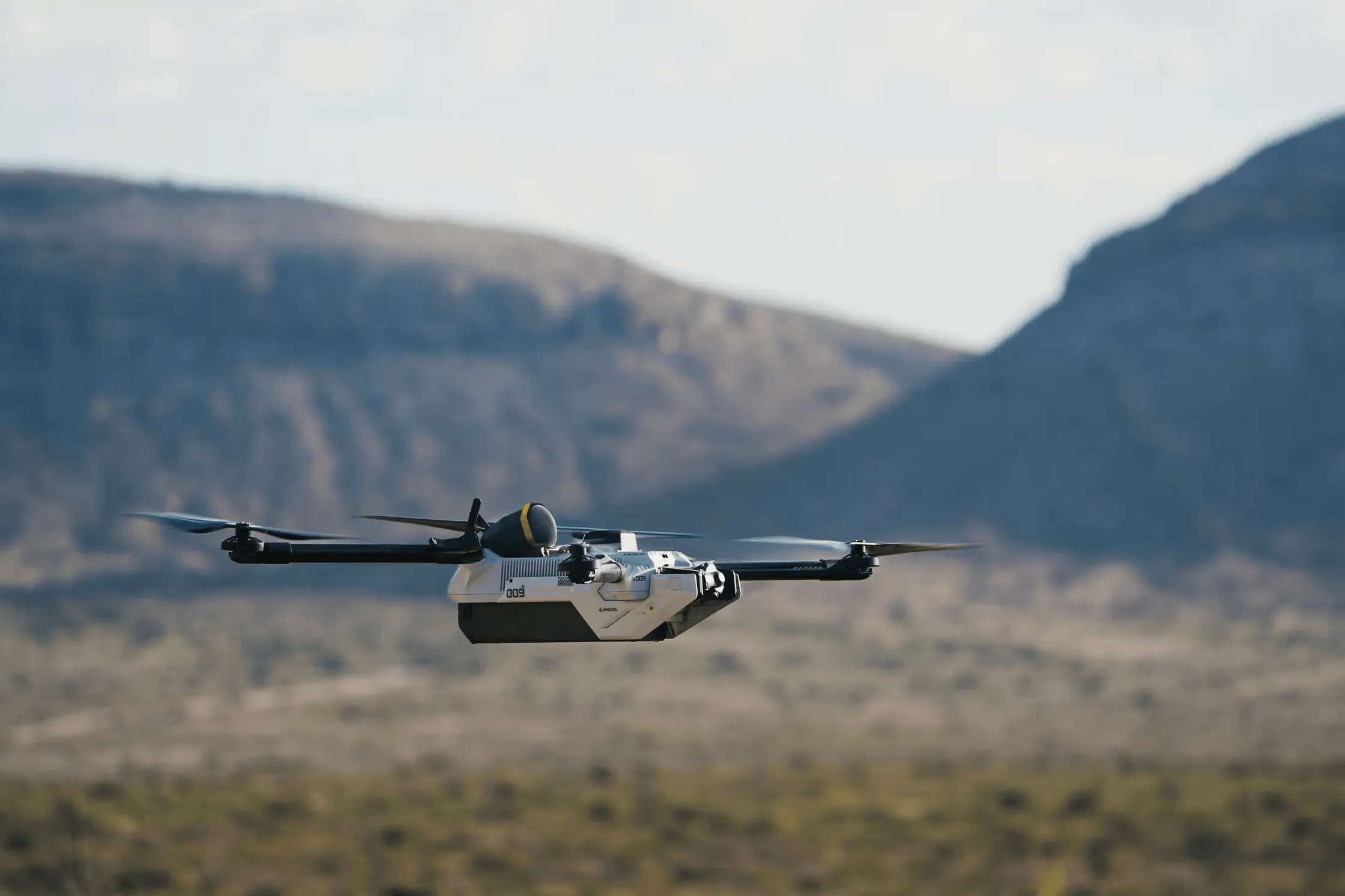
Bolt is Anduril’s quadcopter drone, which Anduril describes as a “family of man-packable, vertical takeoff and landing (VTOL) Autonomous Air Vehicles (AAVs) that delivers simple and flexible capability.” Bolt has two configurations, Bolt and Bolt-M, a munitions variation. The product can autonomously monitor, track, and engage targets.
While Bolt looks like a typical quadcopter, the ability to leverage autonomy makes it significantly more purpose-built for the warfighter. Rather than requiring specialized operators, Bolt can be controlled by a hand-held device with instructions as simple as laying out specific regions to observe. The AAV can also engage independently of a human operator.
It comes in two variants, Bolt and Bolt-M. For defense use cases, Anduril says that it can be used as an attack drone: “Bolt-M delivers on-demand precision firepower against static or moving ground-based targets.” Bolt also has commercial applications for search and rescue operations, surveillance, and reconnaissance.
Autonomous Underwater Vehicles (AUVs)
Dive-LD
Source: Anduril
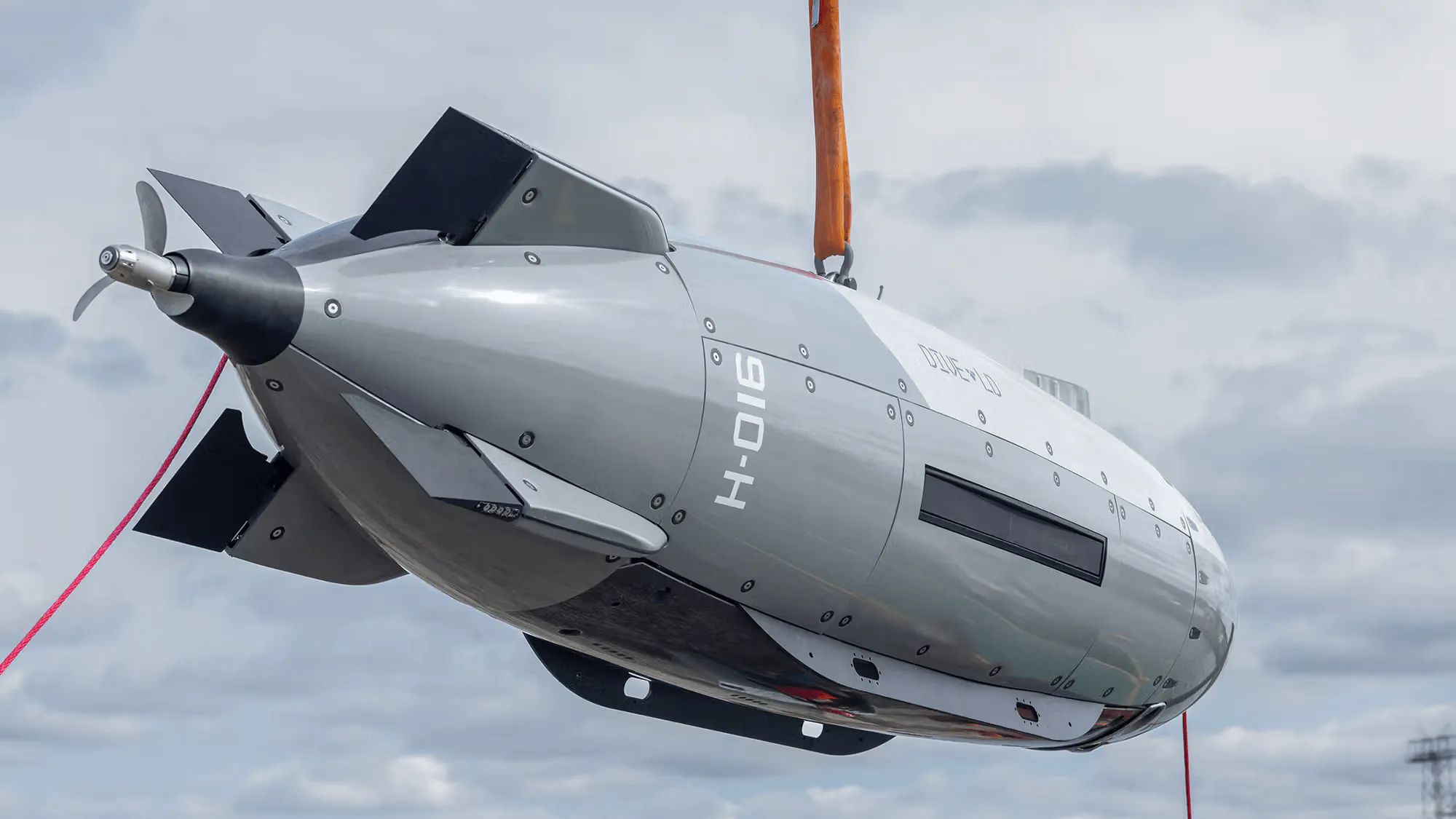
In February 2022, Anduril announced the acquisition of Dive Technologies, expanding Anduril’s coverage area to undersea. Dive’s main product, Dive-LD, is an autonomous underwater vehicle that can be deployed in a variety of missions, including “long-range oceanographic sensing, undersea battlespace awareness, mine countermeasures, anti-submarine warfare, seabed mapping and infrastructure health monitoring.” It is engineered for long-duration deep-sea missions and can operate at depths of up to 6K meters while remaining submerged for up to 10 days.
Ghost Shark
Source: SLDinfo
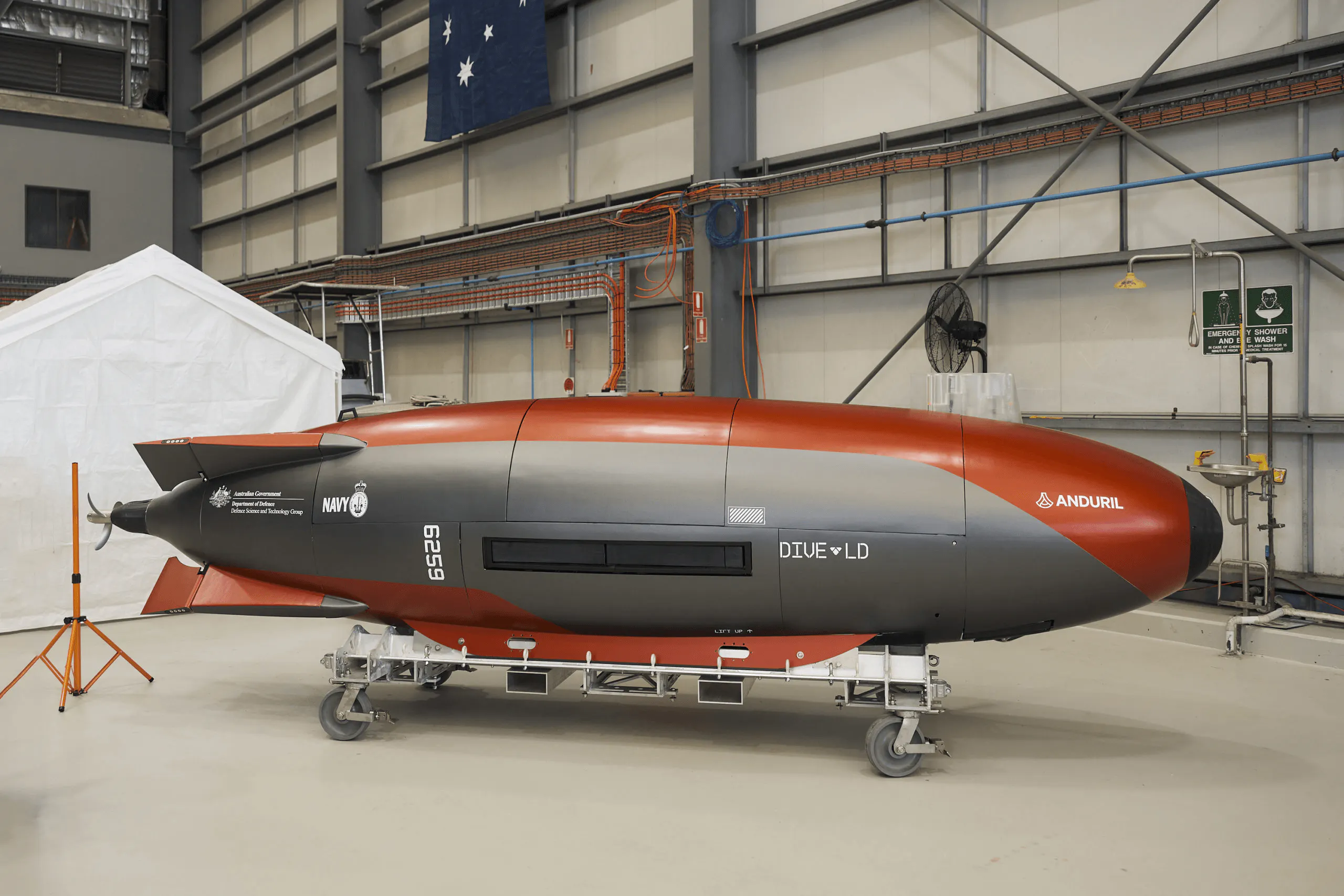
Anduril's Ghost Shark is an Extra-Large Autonomous Underwater Vehicle (XL-AUV) developed by Anduril Australia in partnership with the Royal Australian Navy. It was reported that the company would cover half of the $140 million cost of the project. Anduril’s partnership with Australia was expected to deliver three Ghost Sharks to the Australian Navy by mid-2025, and Anduril announced in April 2024 that the first Ghost Shark prototype had been produced “ahead of schedule and on budget.” According to the Australian Minister for Defense Industry, Pat Conroy, the submarine was “not just meeting, but surpassing” key performance parameters.
In September 2025, Anduril announced that the Australian Navy had awarded it a $1.1 billion Program of Record to deliver a fleet of Ghost Sharks, and that production was already underway. Anduril. According to Anduril, the acquisition of Dive Technologies was a “significant risk” that Anduril took in the development of Ghost Shark months before securing any formal engagement with the Australian government. Anduril hailed the Ghost Shark’s entry into production as “the start of a new era of seapower through maritime autonomy”. Australia invested in the program to counter “the persistent and threatening presence of Chinese naval assets”.
DiveXL
Source: Anduril
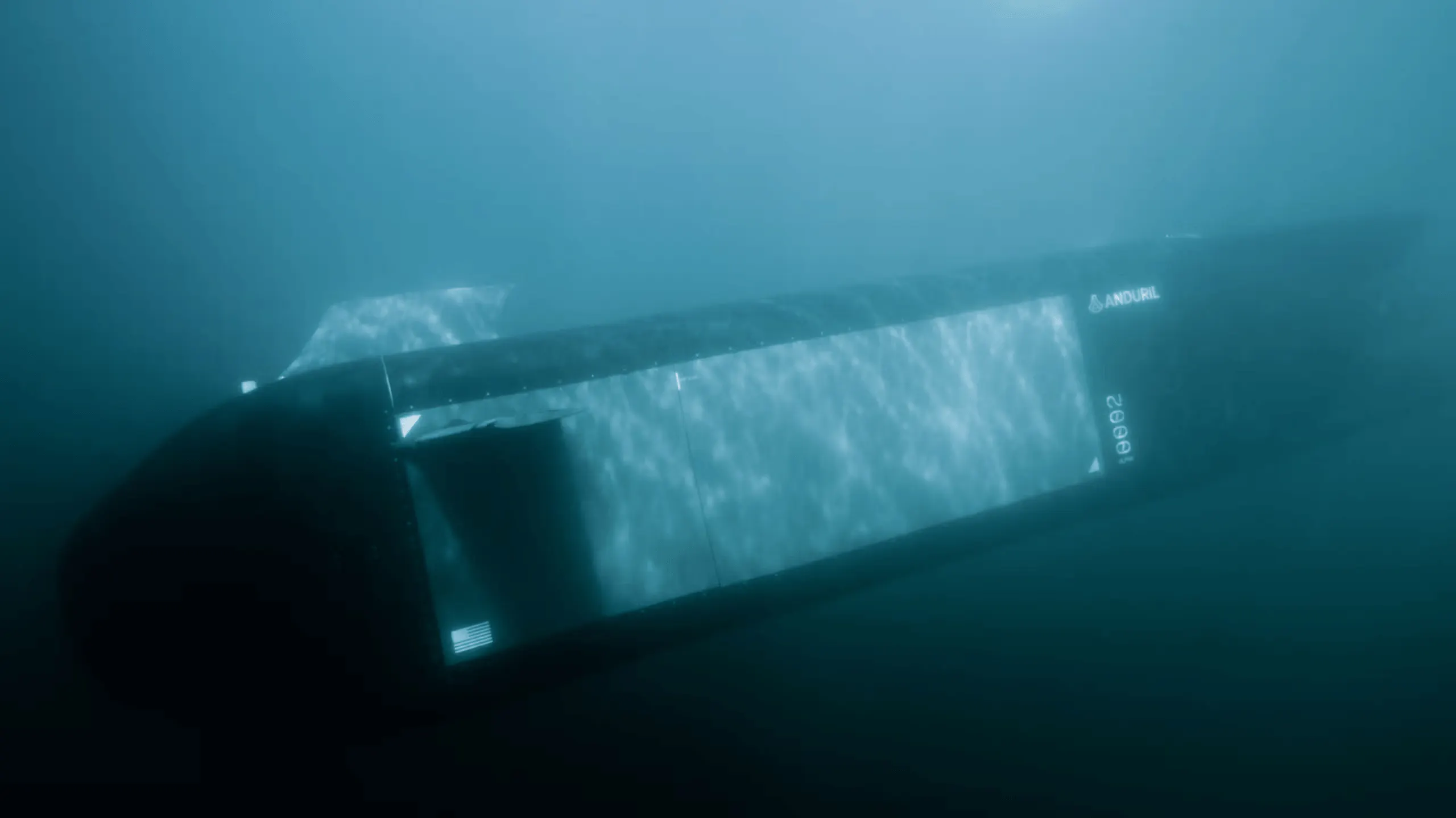
The expanded version of the Dive-LD is the Dive-XL, with up to 3x the payload. In December 2024, the Dive-XL completed a 100-hour single voyage, which the company said was “the longest ever for a vehicle of its class.” According to Anduril, “Dive-XL’s ability to remain underwater for weeks without surfacing or intervention ensures it can operate undetected, extend its range, and deliver payloads in contested maritime environments.” In addition, the device is built to be capable of being stored in traditional storage containers and fit on a transport ship or cargo plane with “minimal infrastructure.”
Copperhead
Source: Anduril
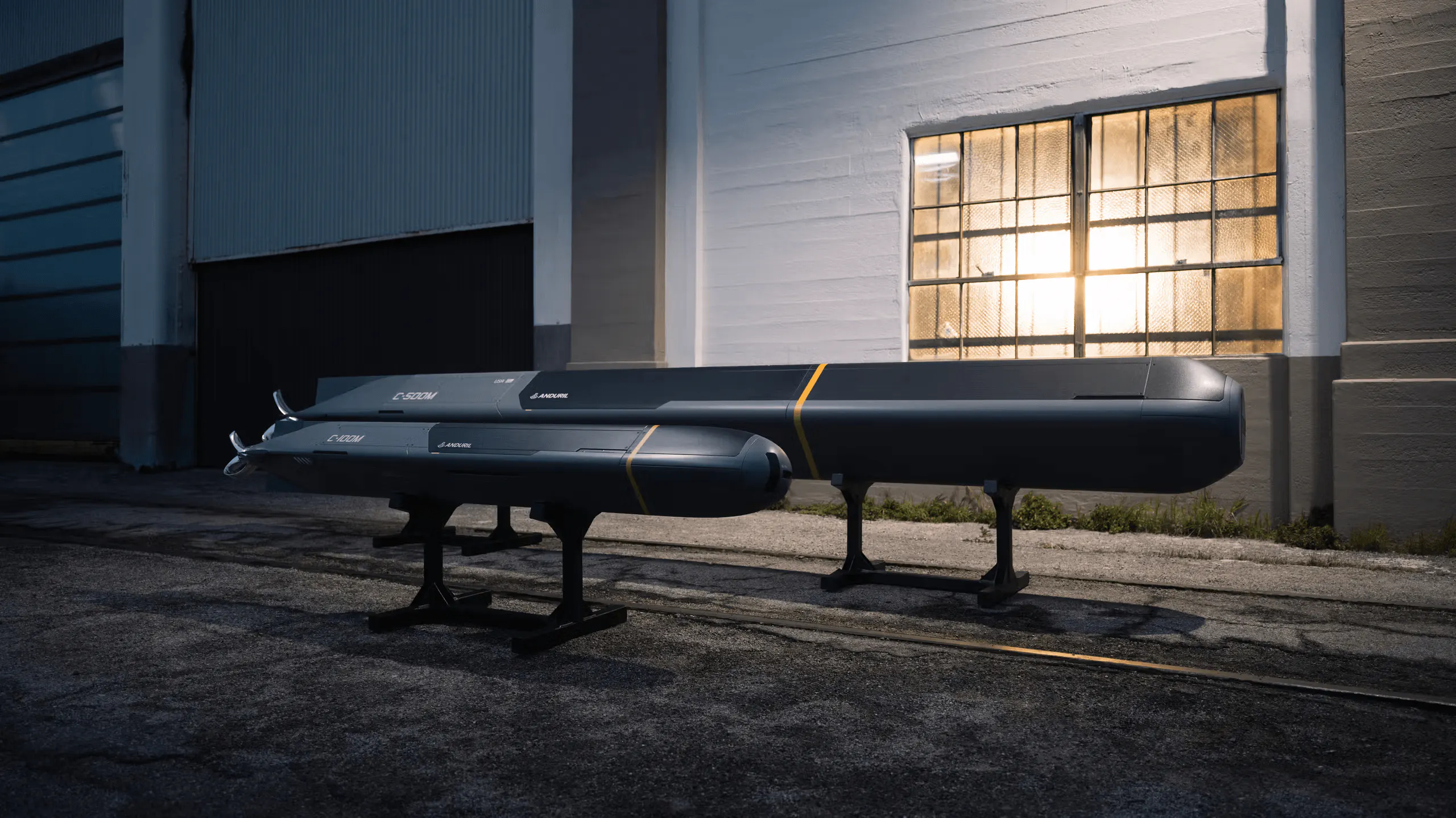
In April 2025, Anduril announced its first torpedo capability with the launch of Copperhead, “a high-speed, software-defined family of Autonomous Underwater Vehicles (AUV) built for delivery by autonomous systems.” Akin to loitering munitions, but in the water, these devices leverage “AI-enabled edge compute [that] fuses sonar and imaging data for object detection, tracking, and obstacle avoidance.” Copperhead torpedoes have two variations: Copperhead and Copperhead-M, a munitions variant. Copperheads can be carried by Anduril’s Dive-XL, which can carry “dozens of Copperhead-100Ms or multiple Copperhead-500Ms.”
Autonomous Surface Vessels (ASVs)
Source: Anduril
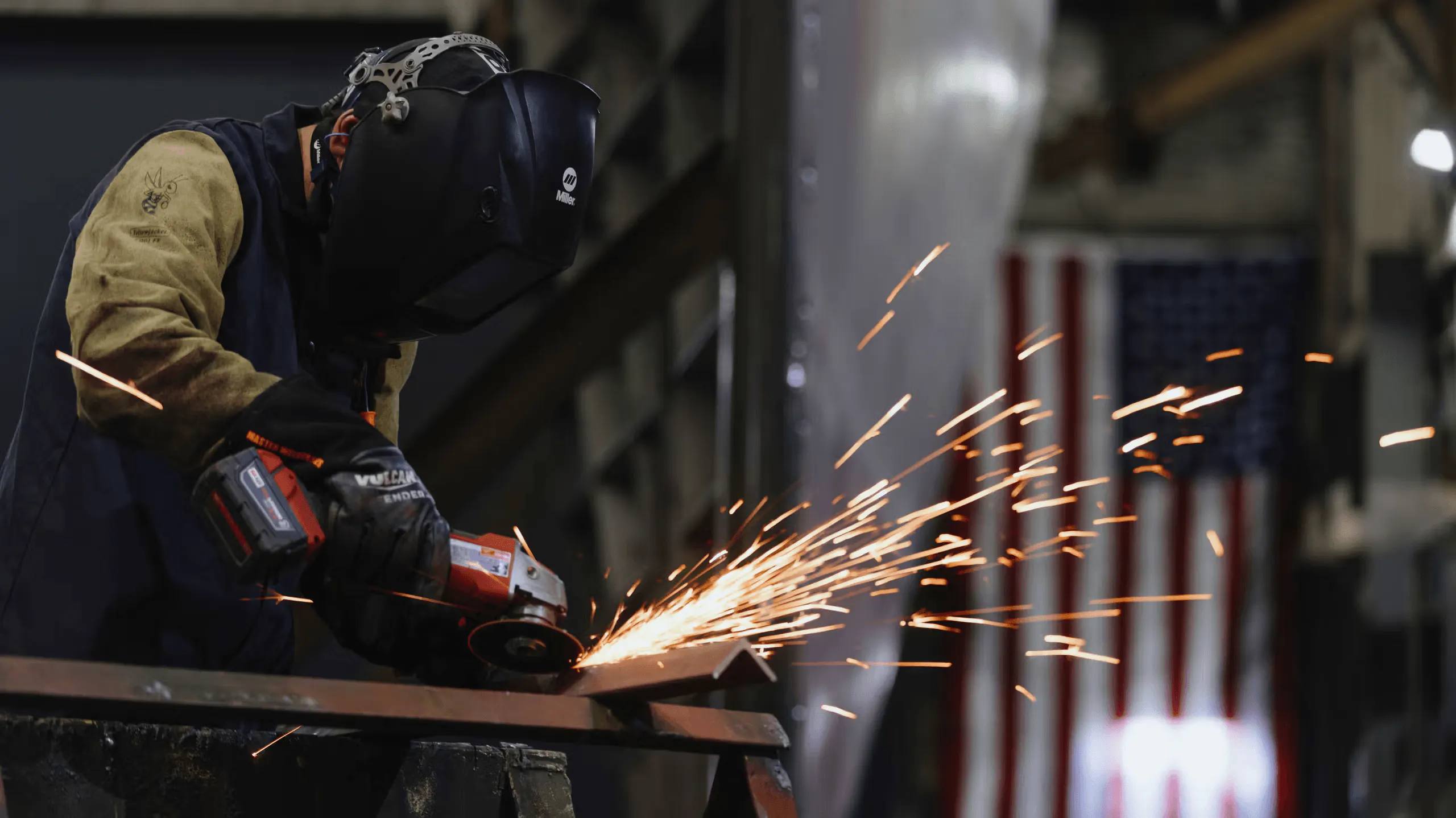
In November 2025, Anduril announced it was building dual-use autonomous warships in partnership with HD Hyundai Heavy Industries. The vessels will be a “modular family of surface vessels for commercial and defense use”, and Anduril is building a variant “designed to meet the U.S. Navy’s needs under its Modular Attack Surface Craft (MASC) program”. Anduril says that the expansion to ASVs was “the next step in Anduril Maritime’s evolution, building on the success of Ghost Shark” to complete even more maritime kill chains.
The prototype for the ASV is being made in Korea to leverage HD Hyunadai’s industrial capacity, with Anduril working to “master the craft” of building the “formidable physical infrastructure” that will be required to build an autonomous fleet in the US. Anduril says that future vessels “will be completely built in the United States”, and that Anduril has invested “tens of millions of dollars” to revamp the retired Foss Shipyard in Seattle, Washington, which would serve as Anduril’s initial US hub for ASVs. Anduril also said that it was partnering with Hadrian on this program to “modernize manufacturing across the supply chain and core ship components”, and that Hadrian had been involved in design from day one.
Solid Rocket Motors
Source: Anduril
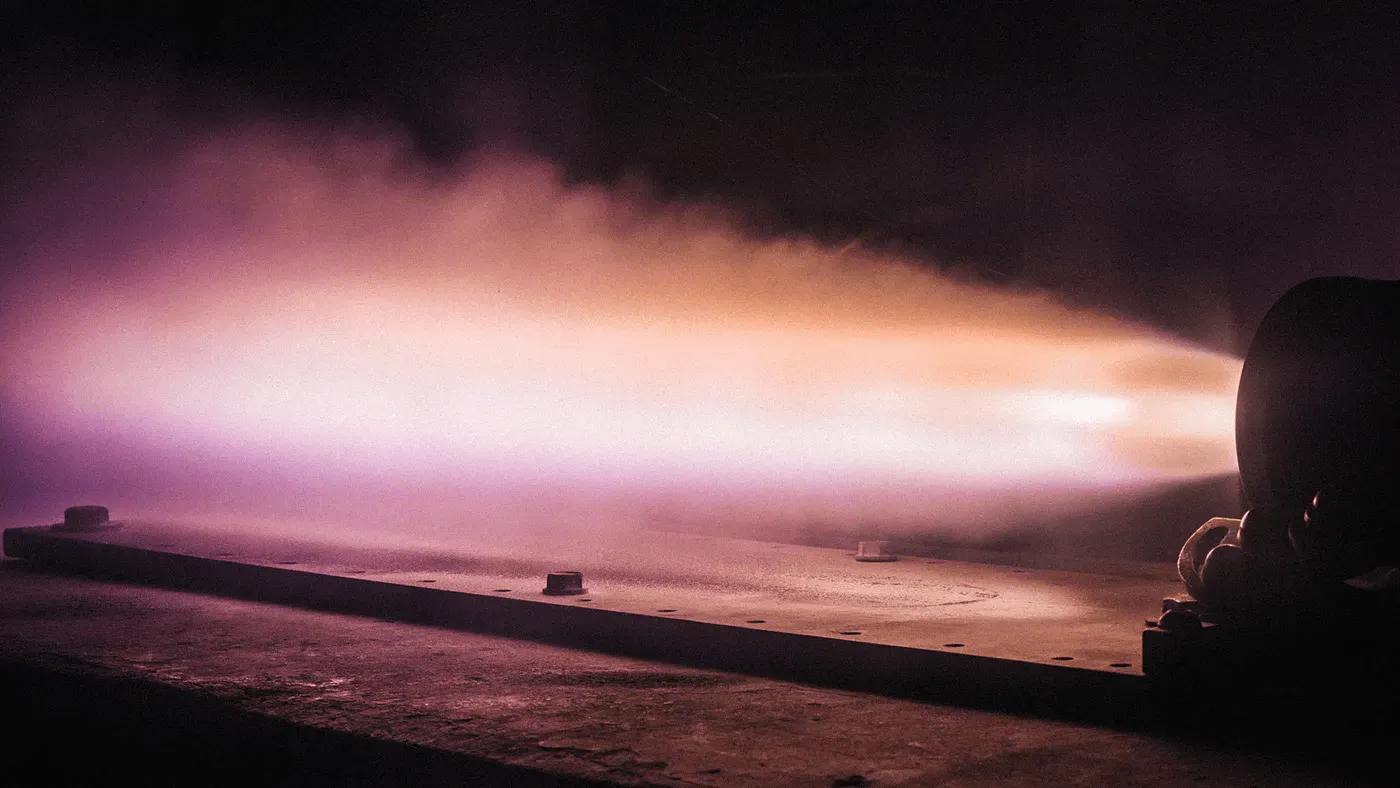
In June 2023, Anduril announced the acquisition of Adranos, a manufacturer of solid rocket motors (SRMs). As Anduril expands beyond producing smaller drones into manufacturing larger aircraft like Fury, or jet engines for products like Roadrunner, the company has expanded its expertise so as to be able to manufacture the requisite components. Palmer Luckey explained the strategy as follows:
“We’re investing in building all these building blocks for missiles and missile systems. Right now, there are only two vendors making the missiles and neither of them are particularly good, and they’re both owned by major defense primes. We need something like 100x more capacity than we currently have, even if we’re not using all that capacity.”
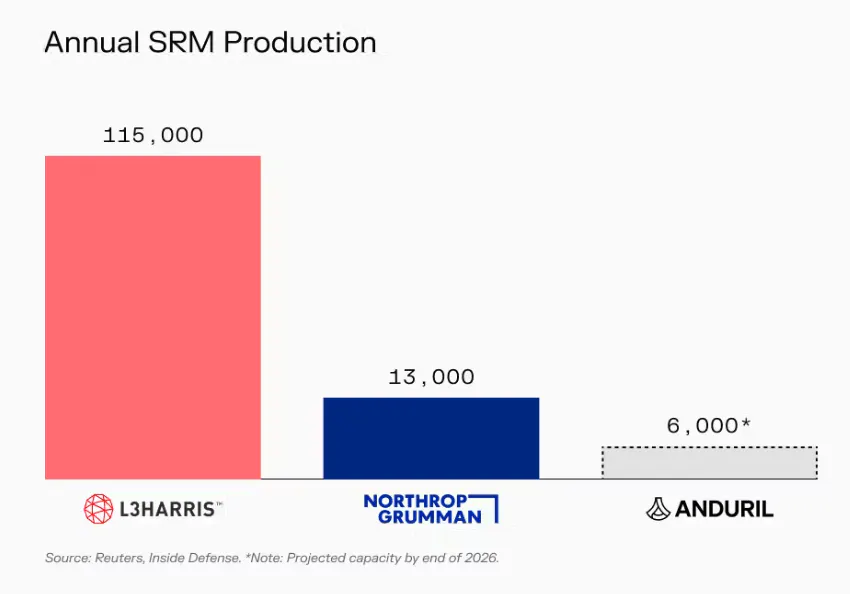
Anduril says that it has now become “a full-service, high-volume merchant supplier of conventional and next-generation rocket motors” for both defense and space launch systems. It also says that it has tested over 700 SRMs since January 2024, in addition to investing $75 million in a full-rate solid rocket motor production facility, and can produce up to 6K SRMs per year at its Mississippi Solid Rocket Motor Complex with just 100 employees. In December 2025, Anduril announced that it had partnered with Boeing to develop the US Army’s new midrange interceptor, for which Anduril would provide its solid rocket motor.
Source: Contrary Research
EagleEye
Source: Anduril
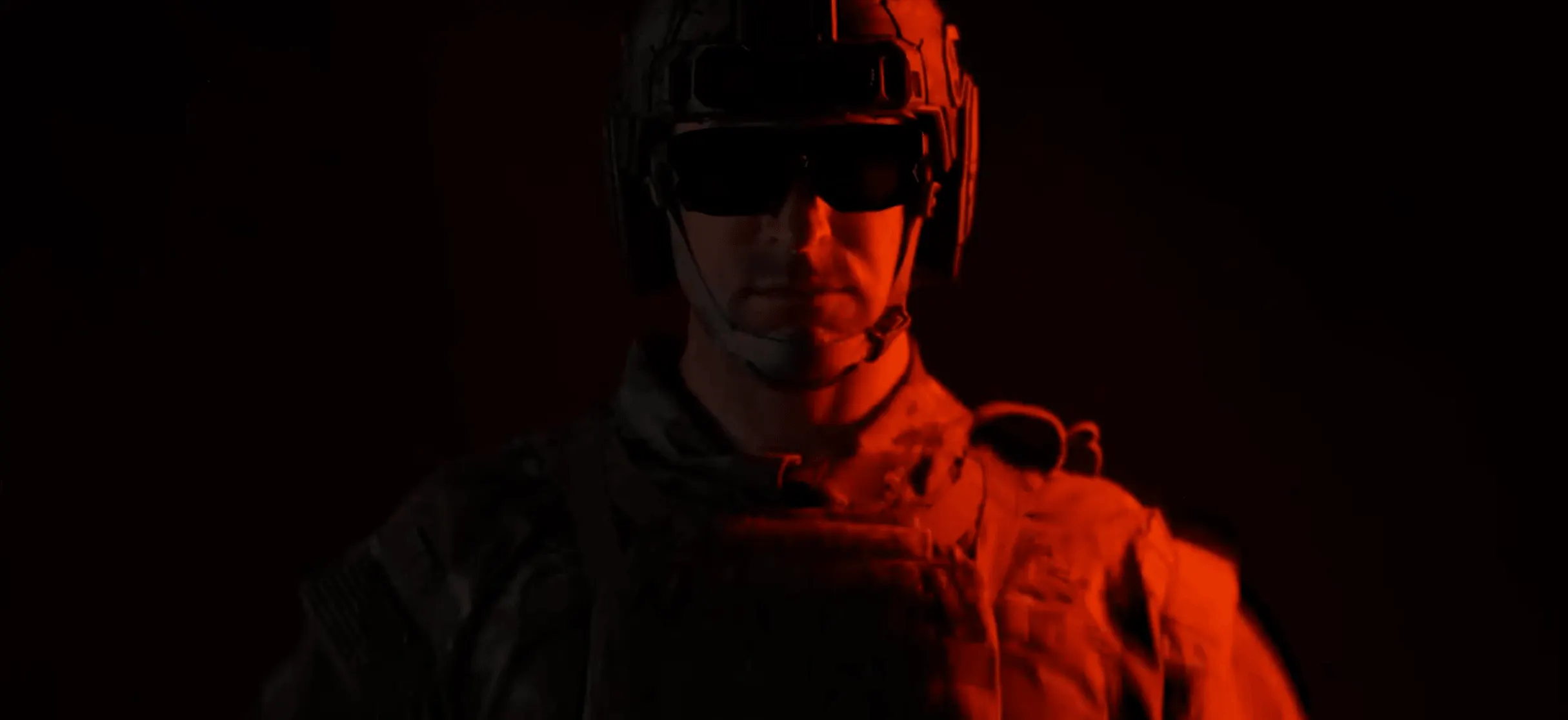
EagleEye is Anduril’s family of augmented reality headsets for warfighters, which it markets as “superpowers for superheroes”. It offers an overlay of AI-enhanced digital vision, Blue Force tracking, and 6DOF (six degrees of freedom) spatial awareness onto the real world to provide warfighters with enhanced perception. It also offers RF (radio frequency) signature detection, rearview cameras, biometric sensors, and battlefield alerts to aid warfighter survivability. In addition, it allows operators to task drones or call for strikes while providing remote mission planning capabilities.
Arsenal
Source: Anduril
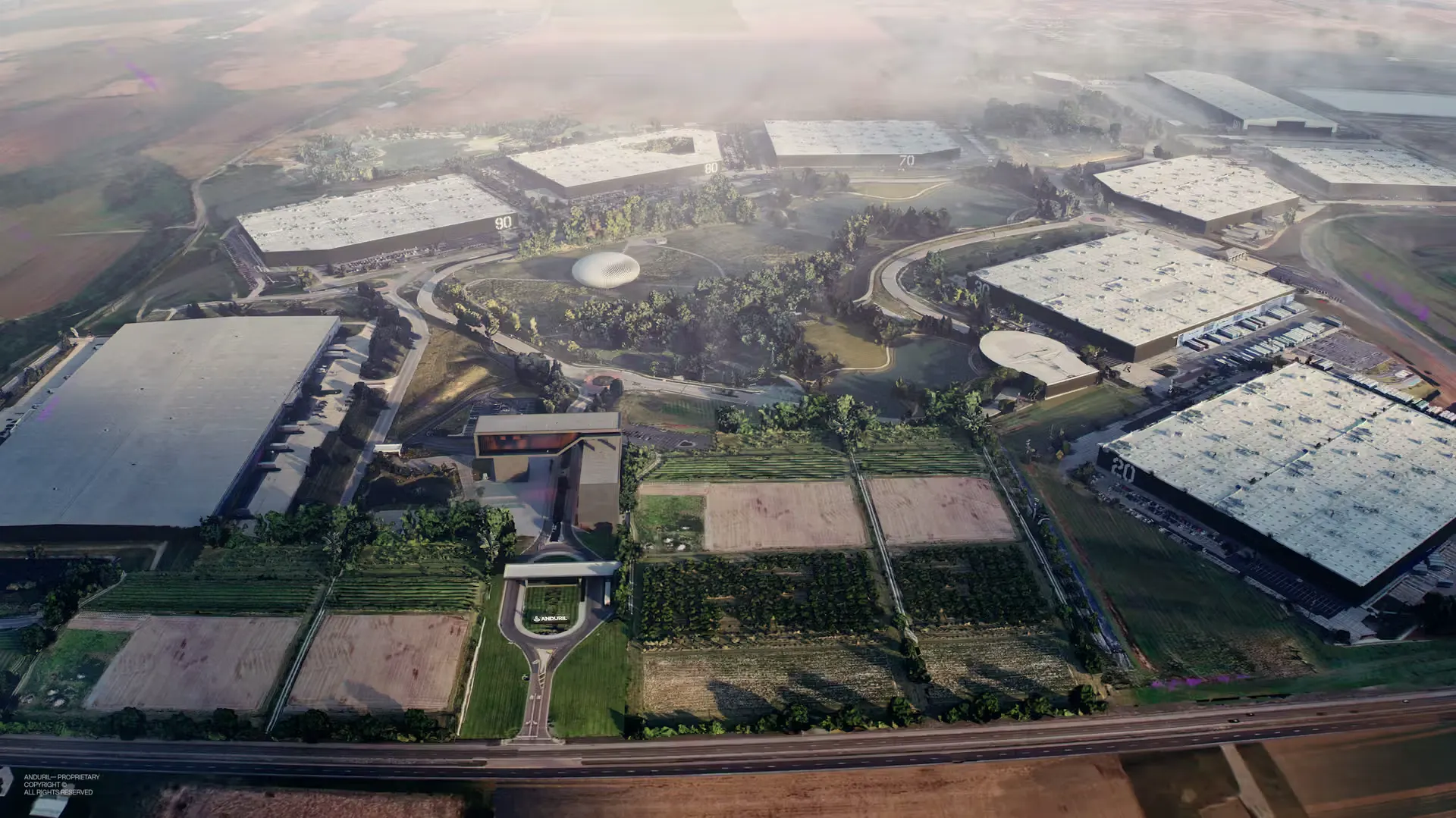
Arsenal-1 is Anduril’s first hyperscale manufacturing facility in Columbus, Ohio. It is designed to produce tens of thousands of Anduril’s defense systems each year, with Anduril claiming that it will “redefine the scale and speed that autonomous systems and weapons can be produced” for the US and its allies and calling the facility “a monumental and essential step toward rebuilding America’s defense industrial base”.
Anduril committed to investing $1 billion of its own money into the facility. Once completed, it is expected to span 5 million square feet and be capable of producing “tens of thousands of military systems each year.” While the first phase is expected to cover five acres, the broader expansion potential could be up to 500 acres. The facility is intended to employ 4K people with an average salary of $132K.
A core component of the Arsenal platform is Arsenal OS, which will power “everything from the design lab to the factory floor”. Anduril compares it to Lattice: “Just as Lattice provides a common set of software services to operate autonomous systems, Arsenal OS provides an additional set of software services to design, develop, and manufacture those systems.”
In January 2026, the company reported that construction of Arsenal-1 Building 1 was “well underway” and would encompass 775K square feet of production space, while it had broken ground on Building 2 (924K square feet) the prior summer. It also said it had finalized a 10-year buildout plan that would bring Arsenal-1 to full scale by 2035.
Arsenal is critical to Anduril’s mission of achieving hyper-scale production and revitalizing the US’s defense industrial base. As Anduril put it in its manifesto, Arsenal’s goal is to:
“…achieve hyper-scale defense production, and when it is complete, it will be a unique capability in the defense industrial base: a software-defined manufacturing platform, embodied in a facility of around 5 million square feet, that is capable of the simultaneous full-rate production of every Anduril product.”
Market
Customer
Anduril's primary customer is the US government, and specifically the Department of Defense. While the company serves a range of agencies, from US Customs and Border Patrol to SOCOM, and has expanded to serving allied militaries such as the Royal Australian Navy or the UK Ministry of Defense, even those international relationships are subject to DoD approval and US foreign policy constraints. As Palmer Luckey has noted, decisions about who Anduril can and cannot sell to aren't ultimately his to make:
"The United States government has rules. So it doesn't really matter if I would be willing to sell to North Korea, or willing to sell to China. It is prohibited by the United States government and I'd go to prison for doing so."
The practical implication of having a single, enormously complex customer, i.e., the DoD, is that traditional market dynamics don't apply. As one former Anduril employee described the DoD as "one huge and extremely complicated customer" defined by hidden relationships, institutional inertia, and a bureaucracy that legacy primes have spent decades learning to navigate. This is precisely why Anduril's investment in lobbying and relationship-building is central to its business. As CRO Matthew Steckman put it, winning in the national security community requires walking "a very complex journey with your customer” and differs substantially from typical markets with multiple buyers.
Market Size
The DoD was an $850 billion agency in 2025, grew to $1 trillion in 2026, and may reach $1.5 trillion in 2027 following President Trump’s April 2026 budget proposal. As of 2025, it held $4.1 trillion in assets, employed 3.4 million service members and civilians, and operated on 4.8K sites in more than 160 countries.
However, not all of that market is addressable by Anduril. Of the DoD’s $841.4 billion budget in 2024, $145 billion went to research, development, test, and evaluation (RDT&E) in 2024. $170 billion, on the other hand, went to procurement. Of the RDT&E budget, ~70% goes to the defense primes for large programs of record. That would have left ~$40 billion for Anduril to pursue in 2024, although that number will likely grow with the rapid expansion of the DoD’s budget in recent years.
Competition
Defense Primes & Incumbents
Defense primes are major contractors that hold direct contracts with the DoD to deliver weapon systems, aircraft, and other defense tech. As of FY2024, the top five defense primes (measured by outstanding obligations) were Lockheed Martin, RTX Corporation, Boeing, Northrup Grumman, and General Dynamics. These five contractors alone accounted for $132.9 billion in DoD contracts in FY2024, out of a total of $445.1 billion in DoD contracts.
The defense primes have faced criticism for a lack of innovation, cost overruns, and delivery delays on the expensive “exquisite platforms” such as multi-million-dollar THAAD systems or multi-billion-dollar aircraft supercarriers. Many of these issues are downstream of cost-plus contracts, which are the typical business model for defense contractors, creating perverse incentives that, as Anduril CEO Brian Schimpf has observed, “shift the risk of the contract and delivery from the contractor to the government.”
The founders of Anduril, like Palmer Luckey and Trae Stephens, have been explicit in their views on defense primes. Palmer describes taking business away from primes as, effectively, a moral imperative: “If we are going to ethically engage in warfare, [then] there is no moral high ground in leaving this problem to existing prime contractors that are incompetent at many things, and totally unable to do other things.” Trae Stephens has been even more direct in saying that: “The people that love the [US] defense primes most are the Chinese Communist Party.”
Other “prime-adjacent” incumbents are also in direct competition with Anduril. For example, the US Air Force’s Collaborative Combat Aircraft (CCA) pitted Anduril’s Fury aircraft against General Atomics. A piece written by General Atomics in September 2024 argued that “it’s clear that [General Atomics is] the strongest contender” for the program. Just a few days later, General Atomics spokesman C. Mark Brinkley called Anduril “the Theranos of defense.” In response, Palmer Luckey posted memes and replied, “The sponsored article written by General Atomics PR people doth protest too much, methinks.” Beyond this back and forth, General Atomics is certainly a formidable competitor. Founded in 1955, it remains a privately held company with “8+ million square feet of engineering, laboratory and manufacturing facilities” and a workforce of over 12K employees.
“Neo-prime” Startups
Shield AI: Shield AI is a defense technology startup that was founded in 2015. It has raised a total of $3.6 billion in funding after having raised a $2 billion in Series G funding at a $12.7 billion valuation in March 2026. Like Anduril, Shield AI’s flagship product is an autonomous software stack for weapons systems. Its hardware stack is more limited than Anduril, with its hardware offerings including X-BAT, which the company calls “the world’s first AI-piloted VTOL fighter jet”. X-bat is in prototype and requires no runway to launch, and is expected to debut with its first flight in fall 2026. It also offers V-BAT, a long-endurance VTOL fixed-wing hybrid drone for ISR missions, and a quadcopter drone called Nova used for indoor reconnaissance and hostage rescue. Despite being competitors, Anduril has worked together with Shield AI to integrate Hivemind into its Fury drone after Hivemind was selected as a mission autonomy provider for the CCA program.
Saronic: Saronic was co-founded in 2022 by former Anduril engineering manager Vibhav Altekar and develops a family of ASVs that share a modular open-architecture design, including the six-foot Spyglass, 14-foot Cutlass, and 24-foot Corsair. Although initially not a competitor of Anduril, as Anduril continues to expand its product portfolio to include naval assets, notably with the launch of its own ASV program in November 2025, it has brought itself into competition with Saronic. The company has raised $2.6 billion in total funding, including a $1.75 billion Series D at a $9.25 billion valuation in March 2023, led by Kleiner Perkins, which it will use to expand the development of its next-generation shipyard, Port Alpha, which aims to deliver autonomous ships at speeds unmatched since World War II.
Epirus: Epirus, founded in 2018, develops counter-UAS directed energy weapons using high-power microwave (HPM) systems. Epirus’ Leonidas products compete directly with Anduril’s kinetic counter-UAS solutions, Roadrunner-M and Anvil. While both are anti-drone systems, they use different methods, with Anduril’s interceptors relying on physical impacts or explosions (kinetic kills) while Leonidas uses a microwave pulse. Despite this competition, Epirus has partnered with Anduril to integrate Leonidas with Lattice. The company has raised a total of $537.6 million in funding, having raised a $250 million Series D in March 2025.
Other notable competitors of Anduril include Helsing, a European defense company valued at €12 billion and representing Europe's push for technological sovereignty; Kratos Defense, a public company that produces low-cost autonomous aircraft and drones and is arguably the most established defense tech disruptor before Anduril; Rebellion Defense, which provides battlefield AI and software; and Forterra, which provides ground autonomy and mesh networking.
Business Model
Cost-plus contracting has become the standard business model for defense contractors. The traditional defense primes know that, on average, their contracts can only generate 7-12% margins. As a result, they’re incentivized to make sure any project is as expensive as possible for as long as possible. Jeff Bezos once famously said, speaking about his competitors, that “your margin is my opportunity.” The same dynamic applies with cost-plus contracting, which represents another opportunity for Anduril to deliberately counter-position itself to the status quo. Brian Schimpf explains how Anduril has set up its business to focus on better incentives to perform:
“The alternative to [cost-plus] is firm fixed price (FFP). So this is what you'd expect in the commercial world. I read a contract, you're going to deliver me X, and I pay you a fixed fee. If you can do it cheap, great, and if you can't, you lose money. That transfers all the risk to the contractor to actually be able to deliver.”
Customers within the DoD dictate the terms and characteristics of a specific contract, so Anduril can’t control the parameters of every contract it works on. As a result, Anduril may work on some cost-plus contracts, but it focuses the majority of its efforts on fixed cost contracts. The combination of fixed-cost contracts and up-front, self-funded R&D that defines Anduril’s product roadmap means that Anduril is presenting a fundamentally different value proposition to customers than industry incumbents do.
But incumbents are not the only challenge to overcome for Anduril’s business model to work. Beyond the existing defense primes asking for funding for specific ideas, the DoD still mostly operates under the belief that it can publish a spec and get the best solution – i.e., it still typically operates under the mindset that its customers should build to spec, not build to mission.
To overturn this status quo, Anduril has had to try to convince the DoD to adopt a philosophy best described as “buying outcomes, rather than just buying a piece of hardware.” For example, Anduril’s $1 billion contract with SOCOM for counter-unmanned systems work is an “indefinite-delivery, indefinite quantity contract,” which means “Anduril is responsible for delivering an outcome of detect, track, and defeat of group 1 through 3 unmanned aerial systems.” Another aspect of Anduril’s approach to contracts is that it seeks to address the lack of incentive to use off-the-shelf parts and to reuse existing technologies, in an effort to be more cost-effective in delivering solutions.
A number of defense primes have been wrestling with their inability to turn a profit on fixed price contracts. Northrop Grumman lost $1.6 billion on the B-21 Raider program, Boeing lost $7 billion on “the US Air Force’s next-generation tanker, the KC-46.” In both cases, they were awarded fixed-price contracts. Brian Schimpf believes these losses weren’t the result of malicious operators but of incentives. “When you’re tooled to not require efficiency, it's corrosive.” But rather than taking the lesson and reforming their structure and capabilities, the primes blamed the contracts. Since these losses, Northrop, Boeing, and L3Harris have all said they’re passing on fixed price contracts.
Anduril can’t control the back-and-forth between the established defense primes and the DoD. It can only continue to demonstrate improved fixed-price performance and superior product quality. Anduril’s go-to-market in selling into the government has been hard-earned, and will likely be the horse it continues to bet on, rather than changing to fit in with other primes.
Traction
Early Adopters
Anduril’s early traction came from early adopters willing to take chances “on a new way of building because their problem necessitates it.” To find people willing to make changes, Anduril targeted problem areas where a safer, existing solution did not exist as an alternative.
One of those early opportunities came from US Customs & Border Protection. While the agency was originally skeptical of Anduril’s capabilities, its relationship with Anduril evolved from a pilot program to a federal program of record worth over $200 million in 24 months, helping Anduril survive the “valley of death” that has defeated many other defense tech startups.
Anduril’s contract with the US CBP eventually grew to $400 million. This accomplishment made Anduril the youngest company to win a federal program since the end of the Korean War. Within the first few weeks in operation, the Sentry towers installed “led to the apprehension of 10 people trying to cross the border into California, and to the capture of 55 individuals and almost 1,000 pounds of marijuana in Texas.” By November 2023, Anduril had “hundreds of Sentry Towers deployed at the southern and northern US borders and at other locations worldwide.”
From 2019 to 2022, the US Customs and Border Patrol installed 100 Sentry Towers. As of August 2024, the US CBP indicated it had installed another 200 Sentry Towers since 2022, for a total of 300 along the Mexico border, representing 30% of the border. Another early example of Anduril’s traction was when the Marine Corps started using Sentry Towers for base protection. Anduril deployed “30 different towers across four or five different bases.” One estimate indicated the Marine Corps paid $13.5 million for installations in Japan and the US.
US DoD & Allied Nation Contracts
According to Brian Schimpf, “the first real beachhead within the Department of Defense was working on counter drone systems.” The threat posed by drones to the US military’s competitive position created real urgency. In April 2021, the leader of US Central Command, General Kenneth McKenzie, publicly stated that “for the first time since the Korean War, we are operating without complete air superiority.” In January 2022, Anduril was awarded a $1 billion contract with the US Special Operations Command (SOCOM) for counter-drone work over a 10-year period. Anduril reportedly beat out 11 other competitors for that contract.
By 2019, two years after its founding, Anduril had already secured roughly a dozen contracts. By 2021, Anduril won its 24th “definitive” contract, a $99 million contract with the Defense Innovation Unit (DIU) for counter-unmanned aerial system capabilities. Other contracts included a $100 million contract in May 2022 with the Royal Australian Navy to develop and manufacture “Extra Large Autonomous Undersea Vehicles (XL-AUVs)”, $12.5 million from SOCOM in December 2022 for Roadrunners, $8 million in September 2023 in Ghost-X for the US Air Force, and a £17 million contract in October 2023 with the UK Ministry of Defence (MoD) for fixed installation force protection. The contract with the Australian Navy would eventually result in Anduril’s Ghost Shark, which secured a $1.1 billion Program of Record contract with the Australian Navy in September 2025.
In June 2024, Anduril was awarded a $19 million contract to “design, build, and test second stage rocket motors” for the US Navy missiles. Later that same month, Anduril also shared that it had been awarded a $18.6 million contract with the US Navy for autonomous underwater vehicles. Also in June 2024, Anduril was selected by the US Air Force as one of four companies “to compete for a program that aims to field a drone prototype capable of being produced cheaply and at scale.” Anduril explained that the output of this program will be an “Enterprise Test Vehicle (ETV) that will serve as the baseline architecture for mass production of next-generation airborne platforms.”
In July 2024, Anduril signed a contract to demonstrate the capabilities of Lattice to the Japan Maritime Self-Defense Force (JMSDF). In September 2024, Anduril expanded its work with the US Space Force when it landed a $25 million contract to update the Space Surveillance Network (SSN). Similarly, in September 2024, Anduril signed a three-year contract with the Royal Australian Air Force to provide air and ground defense capabilities against drones.
In October 2024, Anduril received a $250 million contract with an undisclosed customer within the DoD that would include the purchase of 500 Roadrunner AAVs and access to Anduril’s Pulsar product. In March 2025, Anduril was awarded a $642 million 10-year contract with the US Marine Corps to “deliver, install, and sustain Installation-Counter small Unmanned Aircraft Systems (I-CsUAS).” Later that month, the US Army selected Anduril to provide “4.75-inch solid rocket motors to support the Army’s long range precision rocket artillery missions,” and US SOCOM awarded Anduril an $86 million contract to “accelerate the development and deployment of mission autonomy software to multi-domain uncrewed systems.”
Another opportunity for Anduril is the Loyal Wingman Project, also known as the Collaborative Combat Aircraft (CCA). The project is in conjunction with the Air Force to develop uncrewed aircraft, and previously included Boeing, General Atomics, Lockheed Martin, Northrop Grumman, and Anduril. In April 2024, Anduril announced that it had been selected as one of two vendors to proceed with the project, beating out Lockheed, Boeing, and Northrop Grumman. Fury, Anduril’s semi-autonomous fighter, was the outcome of the project. Fury went from clean-sheet design to first flight in 556 days, completing its first semi-autonomous test flight in October 2025 and entering serial production at Arsenal-1 in Ohio in March 2026, three months ahead of schedule, with the goal of producing 50 aircraft per year in that factory alone.
In 2025, 40% of the value of new contracts was from programs of records, including an expanded $1 billion contract with the Australian Navy for the Ghost Shark program and a $640 million counter-drone contract with the US Marines. In July 2025, Anduril was awarded a $99.6 million contract to develop the US Army’s next-generation command and control prototype. In September 2025, Anduril was also awarded a $159 million contract by the US Army to develop a “night vision and mixed reality system”, which aligns with its EagleEye product, which was unveiled a month later.
In January 2026, Anduril secured a $23.9 million contract to deliver more than 600 Bolt-M systems to the USMC. In February 2026, Anduril was awarded a $43.7 million contract for solid rocket motor production to address “America’s urgent need for scalable, reliable rocket motor production” so that the US can rebuild its munitions production base “to meet the demands of conventional deterrence and possible great power conflict.”
Revenue & Profitability
Anduril had reportedly scaled to ~$500 million of revenue by the end of 2023, doubling its revenue from the previous year. In March 2024, it was estimated that Anduril would reach $1 billion in revenue by 2026, but by the end of 2024, the company was reportedly generating ~$1 billion in revenue. In March 2026, Anduril was expected to double its revenue in 2026 to reach $4.3 billion. The company had $2 billion in cash on its balance sheet at the end of 2025. Reportedly, as of March 2026, ALTIUS was its biggest single revenue generator.
Over Anduril’s lifespan, the company has signed an increasing number of government contracts with both the US government and allied nations. In the early days, Trae Stephens made the point that, while companies like SpaceX took five years to hit $10 million in revenue, Anduril reached that same figure in 22 months.
In terms of its costs, Anduril had reportedly told investors in 2022 that the company expected to burn through $2 billion from 2021 to 2026. In November 2023, Palmer Luckey said Anduril had “no intention of being profitable any time soon.” Instead, in June 2024, Palmer made it clear he would prioritize growth over profitability: “We should be taking all of the money that we’re making and putting it back into growing the company, launching new product lines, trying to become the next major defense prime.” In 2026, its operating loss was expected to increase by 50% to hit $1.2 billion (up from $800 million in 2025), and Anduril expected its gross profit margin to decline from 38% in 2025 to 36% in 2026; however, it expects profit margin to rise up to 40% by 2030 as the company achieves greater scale.
Valuation
In March 2026, it was reported that Anduril was raising a $4 billion round of funding at a $60 billion valuation led by a16z and Thrive Capital. Prior to this round, the company had raised a total of $6.4 billion in funding.
The $60 billion round would represent the second time the company doubled its valuation in as many years. In June 2025, Anduril raised a $2.5 billion Series G led by Founders Fund at a $30.5 billion valuation, which was reportedly over 8x oversubscribed. This more than doubled its valuation from its prior round, which raised $1.5 billion at a $14 billion valuation, also led by Founders Fund. Other notable investors of Anduril include Lightspeed Venture Partners, Craft Ventures, Valor Equity Partners, and Contrary.
Source: Koyfin (as of April 24, 2026)
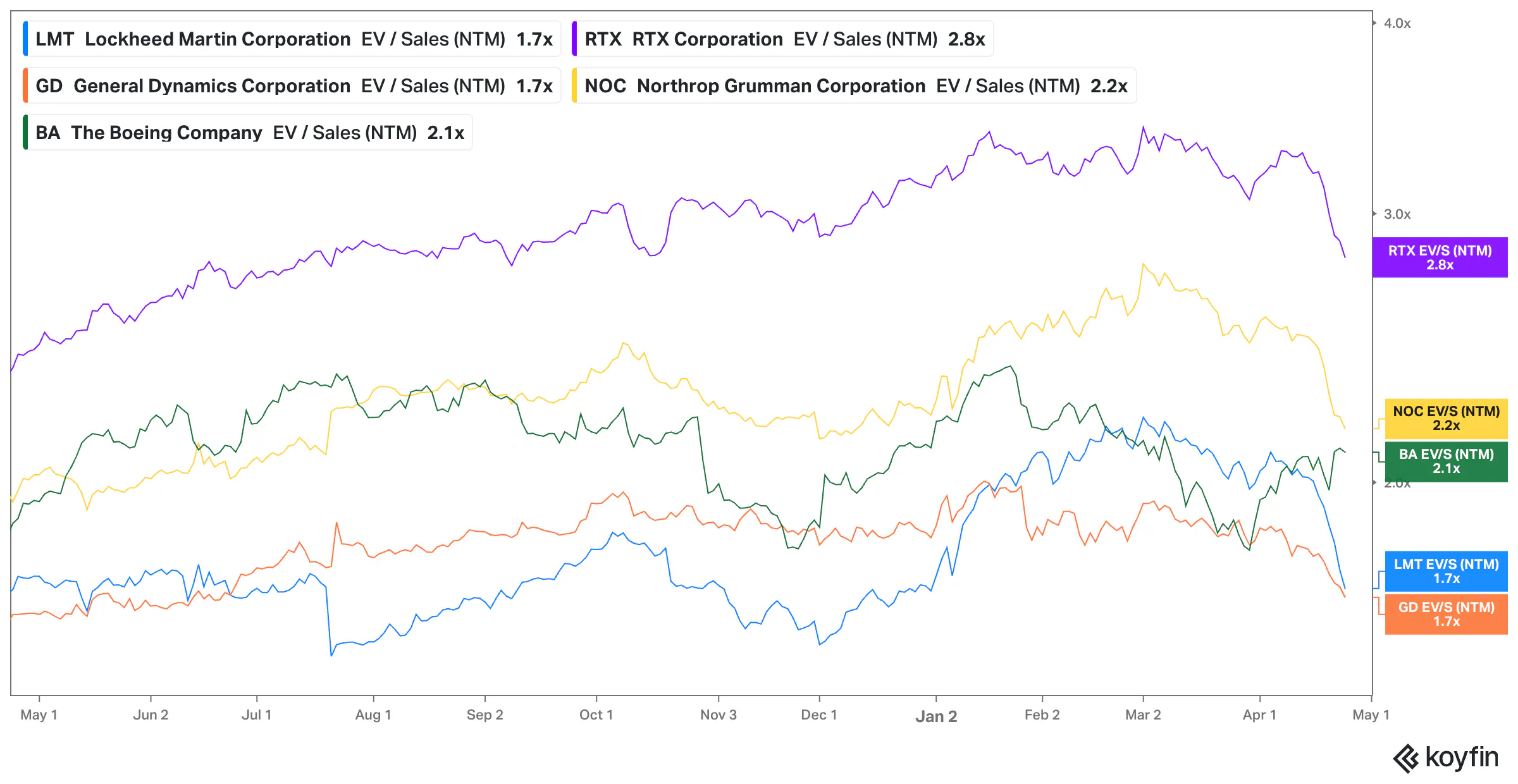
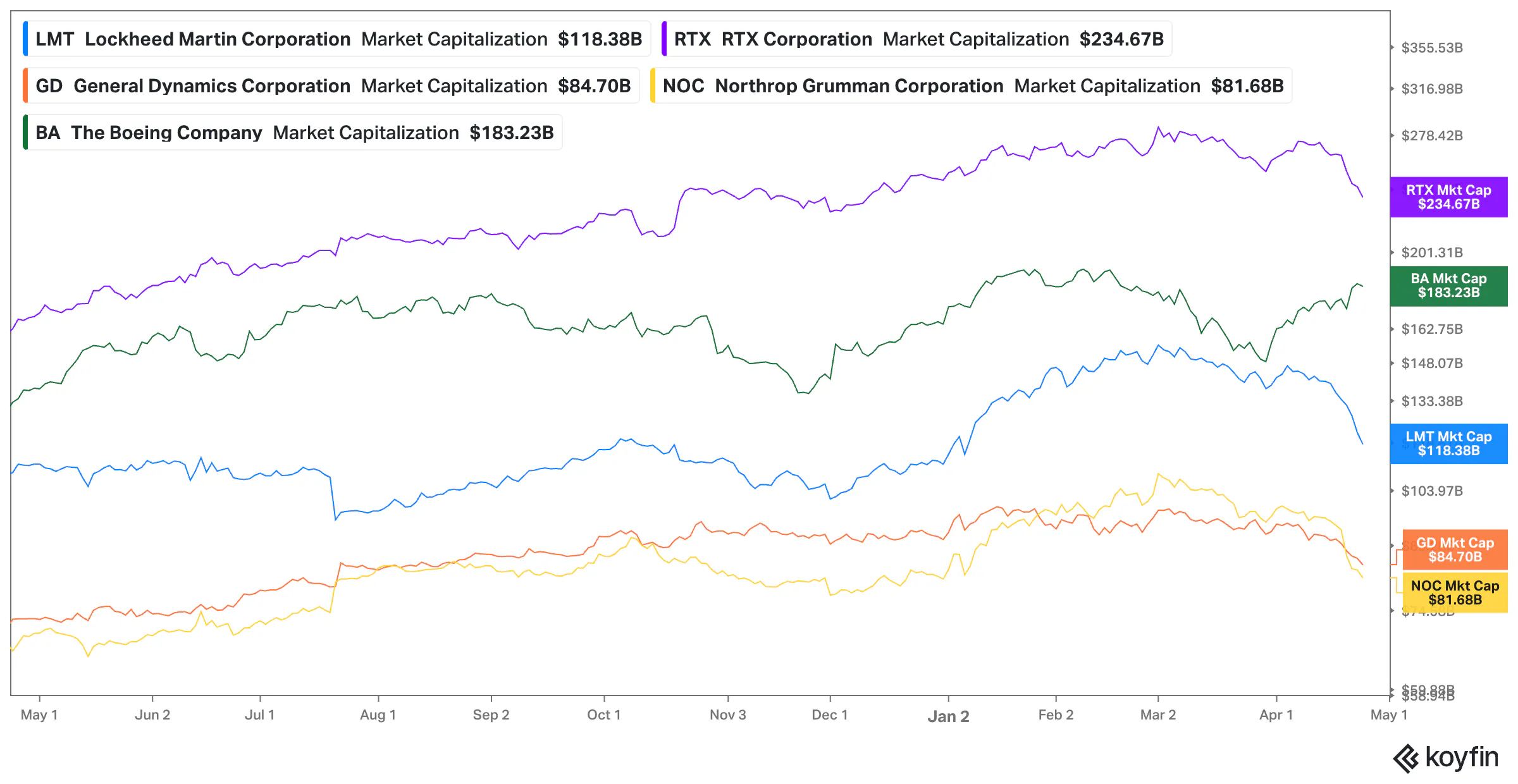
Anduril forecast it would double its revenue in 2026 to $4.3 billion; if so, this would represent about a 14x revenue multiple at its $60 billion valuation. For comparison, most defense primes are trading at revenue multiples ranging from 1.7x on the low end (Lockheed Martin and General Dynamics) to 2.8x on the high end (Raytheon). At a $60 billion valuation, Anduril is approaching the market cap of the lowest-valued defense prime, Northrop Grumman, at $81.7 billion.
Source: Koyfin (as of April 24, 2026)
Key Opportunities
The Return of Great Power Competition
America’s certitude and optimism following its victory in the Cold War led to a generation of hubris that benefited its geopolitical rivals. In 1991, Colin Powell quipped about the lack of formidable opponents on the world stage: "I'm running out of demons. I'm running out of villains.” Since the 1970s, the US’s approach to China, for example, has rested on “the underlying belief that US power and hegemony could readily mold China to the United States’ liking.” As Chris Brose put it:
“We have been blinded by the myths we have told ourselves—that, with the end of the Cold War, the world had transcended great-power competition and conflict, that, in the words of The 9/11 Commission Report, transnational threats such as terrorism, not great-power rivalry, were ‘the defining quality of world politics.’ We told ourselves that China and Russia wanted to be like America, and that greater exposure to US technology, business, and culture would make them into the partners we wanted. It is not that we were wrong to try to achieve these aspirations. It is that we clung far longer than we should have to beliefs increasingly at odds with the realities emerging all around us.”
Now, with conflicts like the Russian invasion of Ukraine and the continued threat posturing of China against Taiwan, we’re seeing just how wrong that line of thinking was. Writing in 2020, Chris Brose observed that the return of great power competition was not a departure from the historical norm, but a return to it.
Because of the high cost of great-power conflict, proxy wars often replace direct engagement, as became clear during the Cold War. One such proxy conflict is the 2026 US-Iran war. Iran is a key ally of both Russia and China. Iranian drones, for example, are a meaningful asset for Russia. In fact, Russia paid $1.2 billion to Iran in April 2024 for 6K drones that were advertised as part of Russian propaganda. Meanwhile, in October 2024, it was reported that Beijing was investing $400 billion in Iran’s economy over the next 25 years “in exchange for heavily discounted oil.”
Both China’s discounted oil and the Shahed drones used by Russia in Ukraine were key variables in the US conflict with Iran, and validate Anduril’s thesis on the importance of cheap, attritable assets in modern warfare. Shahed drones, which cost $20K to produce, were used by the IRGC to close the Strait of Hormuz alongside missiles and mines. This was accomplished despite the almost complete destruction of the Iranian air force, the extreme degradation of Iran’s ballistic missile launch capacity, and the destruction of the Iranian navy.
Part of the reason that the Hormuz closure represented such an asymmetric opportunity for Iran was the geography involved, with Hormuz representing a 20 to 30-mile-wide chokepoint through which about one-fifth of global oil consumption flows, including about 50% of China’s total crude oil imports. But it was also because the cheap drones that Iran was using to threaten commercial shipping in Hormuz, along with US allies in the Gulf and military bases in the region, were being shot down by US missiles that cost over $1 million and take years to replace, severely depleting the US interceptor stockpile.
The Shahed drone is so cheap for two reasons: it uses commercial components, and it doesn’t have to go through an expensive DoD procurement process that inflates production prices. Ukraine, which is facing the same drones in its conflict with Russia, has fielded interceptors that cost between $1K to $2K, which Palmer Luckey has stated was the result of Ukraine copying what Anduril pioneered with Anvil in 2019.
Thus, the proxy war in Iran and the Hormuz closure are a case study in several trends that validate Anduril’s product philosophy and overall thesis: the return of great power competition in an increasingly multipolar world, the need to revitalize the defense-industrial base of the US in order to protect its interests against its rivals (especially in key chokepoints of the global economy like the straits of Hormuz, Taiwan, or Malacca), the importance of building weapons systems for the US that are cheap to produce in mass and can use commercial components, and the importance of moving away from the cost-plus contracting status quo that dominates defense procurement and has led the US military to overspend on large, expensive platforms delivered by inefficient defense primes that are unable to meet the demands of the modern battlefield.
Emerging Domains of War
With a focus on innovative defense technology, Anduril has a front-row seat to the rapidly changing landscapes of war. On the one hand, it's easy to limit Anduril to the surface area its products currently touch. However, its rapid evolution shows that this is a short-sighted view. Originally, you could have said Anduril is primarily a border monitoring and detection company with Sentry Towers. But with the expansion to products like Fury, Dive-LD, and its forthcoming ASVs built in collaboration with South Korea, the company broadened that coverage to new domains such as air and sea. Future domains of warfare that Anduril may expand into are space and subterranean warfare.
Subterranean Warfare
Not all the areas of opportunity for Anduril are necessarily constrained to existing domains of conflict. Technology has slowly taken warfare from a largely two-dimensional activity (fought on the surface of the land and sea) to a three-dimensional one (fought in the air and under the sea). But, as Palmer Luckey has speculated, improving technology might continue to expand the physical domains where warfare takes place:
“I believe the next war fighting domain is the subterranean domain. People think that I mean tunnels and caves; that isn’t what I mean. I mean using the entire volume of the Earth as a three-dimensional space that you can maneuver in and fight wars. The United States and the Soviets used to believe this during the Cold War. [They both] had subterranean programs trying to build nuclear-powered underground vehicles that could bore through the earth. The idea that you could go anywhere arbitrarily and deliver big payloads, and do so using the Earth as the medium through which you traveled and hid. The Soviets actually built a working prototype. I’ve actually built vehicles here at Anduril that are capable of tunneling underground and delivering a variety of electronic and kinetic effects wherever you want to go.”
One of the only tunnel-digging (or boring) companies the average person might be familiar with is Elon Musk’s Boring Company. But Palmer is correct in hinting at the history of boring capabilities. Contrary’s essay, The Frontier of Boring, lays out the history of “the Kola Superdeep Borehole, a scientific drilling experiment carried out by the Soviet Union in the 70s,” which measures 15x the depth of the height of the Burj Khalifa, the tallest building on earth. Those early prototypes, called subterrenes, were built using nuclear energy and even inspired the 2003 movie, The Core.
Subterranean warfare can feel purely theoretical given the lack of progress in boring technology since the 1970s. Even Anduril’s executives acknowledge it as a long shot, but they also acknowledge that it represents the kind of unconventional thinking that has allowed Palmer, and by extension Anduril, to be successful to this point.
Palmer has pushed subterranean warfare beyond an interesting concept. In an August 2024 profile in Tablet Magazine, he claimed to have “figured out how to build a subeterrene without nuclear”, although he was unwilling to divulge any details. The journalist who wrote the story recalled a humorous interaction where, after saying this, Palmer’s “press handler” made sure to emphasize, “we’re not actively working on that.” Palmer’s response? “Oh no, we are.”
Once again, Anduril’s foresight is starting to appear prescient. In April 2026, Israel's Directorate of Defense Research & Development (MAFAT) attaché to the US admitted:
"All of our enemies are going underground. Iran, Gaza, Syria, Lebanon, China, even North Korea. And we don't have any good answers for that. We don't see enough investment in real subterranean warfare capabilities."
Space Warfare
On several occasions, Palmer Luckey has hinted that Anduril is working on projects for space, potentially an area the company could expand into more deeply via acquisition. In early 2023, Palmer indicated that Anduril had several space force contracts that it couldn’t discuss the details of. In September 2024, those details were finally shared in a post titled “Anduril Expands Capabilities into the Space Domain.”
The vision for Anduril’s work in space was extensive, with plans to “enhance mission-critical Space Domain Awareness, Space Control, and Command and Control (C2) for U.S. military warfighters and allied partners, providing end-to-end solutions to address the growing threats posed by adversaries in space.” This included “fully integrated hardware and software systems, utilizing Lattice for Space Missions, modular mission payloads, and strategic partnerships across the space industry.”
In September 2024, Anduril announced it expected “satellites to be launched by the end of 2025,” with the first launch meant to serve as “a testbed for maturation of multiple Anduril and third party payloads which we will be announcing in the coming months.” Even before those full launches, Anduril had gotten “multiple hardware and software payloads already in orbit.” As Anduril expands its products into space, it’s important to note that the availability of space as a potential domain of warfare for the US is, in large part, thanks to SpaceX, the reusability of rockets, and the plummeting cost of launches.
As Brian Schimpf explained in June 2023, it doesn’t seem like the weight of this paradigm shift has sunk in for a lot of people, including those interested in preparing the US military for the future of warfare:
“I don't think the US government has fully appreciated the monumental shift that has happened with low cost of launch, and how cheap it is to get very large constellations of satellites into low earth orbit, and operate them efficiently at scale. There's a lot of technology overlap with the types of command, control, and communications technologies that we've worked on. That is a monumental shift that, I think, is maybe 5% of the way through playing out.”
The dramatically reduced cost curve in space launches has reduced the speed of iteration in space technology from decades to years. This increased speed in getting things to space could extend itself from space-based solar arrays to space mining technology, and beyond. Just as Brian Schimpf described the world of satellites as only 5% played out, space tech in general is in its early innings, presenting a lot of opportunities for Anduril in the longer term. One former Anduril employee describes the types of things the company was working on as “stuff out of the movies.” When they found out about it, they “thought it was a joke.”
From hypersonic missile defenses to tracking satellites, there’s an endless supply of problems to solve in space. SpaceX’s Starlink already has classified contracts, including a $1.8 billion contract signed in 2021 with the National Reconnaissance Office and other intelligence agencies to build “a network of hundreds of spy satellites.” In fact, when Starlink was deployed in Ukraine despite Russian jamming efforts, “it was the first time a commercial company had provided the backbone for a country’s military capability during wartime.” Anduril may be able to address the same market at a similar scale.
Already, Anduril is signing customer contracts in space, starting with a $25 million contract with the US Space Force that the company announced in September 2024. Next, in October 2024, Anduril announced a partnership with Apex, which will provide space buses “to rapidly deliver capability to customers, such as space situational awareness, proliferated LEO architectures, and missile warning and tracking.” Nevertheless, Anduril’s work in space is likely just getting started. Over time, space will become an even more contested domain as access becomes easier and easier.
New Weapons Technologies
Anduril has already proved its ability to create products across land, air, and sea. While there are a myriad of new weapon types, there are plenty of advances in these existing areas that Anduril could take advantage of.
For example, hypersonic missiles. Anduril’s acquisition of solid rocket manufacturer Adranos in June 2023 expanded the company into an increasingly critical area in defense: hypersonics. Hypersonic missiles represent a new challenge within missile defense because they are much more difficult to defend against than other types of long-range missiles, which are either slow or predictable enough for it to be possible to shoot them down.
Brian Schimpf has described the massive divide between Chinese hypersonic missile tests and those in the US. For example, by 2021, China had reportedly conducted “hundreds” of hypersonic missile tests, while by July 2022, the US had only conducted 21. The need to rapidly increase the volume of hypersonic manufacturing in the US is palpable, and Anduril is placing itself directly in line with that need.
Another supposedly highly classified project in the realm of high-powered, high-velocity weapons is a hypervelocity gun weapon system (HGWS), which could be used to respond to threats like cruise missiles. In general, high-velocity weapons represent a new frontier of warfare that could prove decisive for whichever side takes the lead, both as offensive and as defensive systems. Chris Brose concluded in his discussion of such weapons that, “the race to develop new high-speed weapons—not just hypersonic weapons, but also supersonic cruise missiles, electromagnetic railguns, hypervelocity projectiles, and new long-range cannons to fire them—is driving a related race to develop counters to these weapons.”
Another next-generation weapon type that Anduril could expand to is directed-energy weapons, such as those developed by Anduril competitor Epirus. As Chris Brose discusses, these have become operationally viable for the first time. These weapons enable people to “shoot at the speed of light without the constraints of physical ammunition,” which enables attacks “in larger volumes and at greater velocities than ever.” The potential of directed energy weapons lies in the fact that they could drastically reduce the cost of ammunition, similarly to how reusable rockets caused launch prices to plummet, but to an even greater order of magnitude. Directed-energy weapons have now seen real-world use: Israel has developed a high-energy laser weapon known as Iron Beam that was deployed against a Hezbollah drone attack in March 2026.
There are other types of advanced weapons that Anduril could also expand to develop. Like quadrupedal unmanned ground vehicles (called "Q-UGVs" for short, also known as “robotic dogs”). These unmanned vehicles are being tested by the US Marine Forces Special Operations Command (MARSOC) with “AI-aimed rifles… for remote engagement.” While Anduril hasn’t engaged in these types of projects publicly, it's certainly within the realm of possibility for the company.
Key Risks
Reliance on Chinese Manufacturing
As of 2025, the DoD relied on Chinese supply chains for 80K individual parts and components of over 1.9K weapons systems, making 78% of US military weapons systems vulnerable to Chinese supply chains, particularly because of Chinese dominance of rare earth supply chains. In what feels like an epic understatement, two members of Congress referred to this dependence as “a serious national security threat.” Another example, one report indicated that “the US Navy’s newest aircraft carrier is powered by over 6.5K Chinese computer chips.” The same is true for the B-2 bomber, Minuteman ICBMs, the Ohio Class submarine, and Patriot Missiles.
Although Anduril is not completely insulated from this risk, it has taken deliberate steps to address it. In February 2023 at a defense summit, Chris Brose explained how, as a company, Anduril “started from the premise that we cannot afford to have massive exposure to China.” Over the course of the first five years of the company’s life, Anduril “unwound what limited exposure we did have in things that were not national security critical components.”
In September 2024, Brian Schimpf said that Anduril “has reduced its spending on parts from China to 0.2% of its total supplier budget.” While Anduril has seemingly removed all dependence on Chinese manufacturing for critical components, there are potentially smaller, commoditized components that are simply easier to get from China, but not impossible to replace. But Anduril is just one piece of a much bigger puzzle in the defense industry, and reliance on China is certainly present elsewhere in it.
Political Dependency
Anduril can attempt to control the messaging around its products and position. But because the government is such a big partner and customer, there will always be one critical dependency that Anduril can’t directly control. Despite its best efforts at policy advocacy, working with the US government will always be a messy and complex business.
Every company is, to some extent, at the mercy of customers, suppliers, and partners. But Anduril is, uniquely, exposed to the political machine. And the political machine, for better or worse, is heavily swayed by public opinion and voting polls, a reality that faces every defense contractor.
In addition to the political divide, there is legitimate concern over the bloat within the DoD. The defense department has failed its annual audit every year since the Pentagon began auditing itself in 2018, failing for the eighth time in a row in November 2025. In fact, half of the department’s $3.8 trillion of assets have failed to be properly accounted for, with $36 billion worth of military assets declared by the US General Accounting Office (GAO) as “items it did not need” and $3 billion in equipment that the US Navy has lost track of. DoD officials have said it could take decades to “get all the agency books in order.”
Summary
Anduril is a defense company whose mission is to “rebuild the arsenal of democracy” by revolutionizing the broken paradigm of defense production in the United States. It focuses not only on product innovation with its heavy investment in R&D relative to competitors, but also on advocating for policy change, better procurement processes, and a shift from a US military reliant on expensive legacy platforms to modern autonomous, networked assets that are cheap and can be mass-produced using American components. Its ambitious vision is to help the US maintain its ability to deter conflict, and to help US allies like Australia, Korea, and Taiwan build up their capacity to respond to aggression. If Anduril succeeds, it could not only disrupt the American defense industry but also profoundly impact how the next century unfolds.
*Contrary is an investor in Anduril Industries through one or more affiliates.